Concern · Ear

Earlobes, repaired.

Torn, split and stretched earlobes are common — the result of heavy or snagged earrings and gauges over the years. Earlobe repair is a careful dermatosurgical procedure: the edges of the tear are gently freshened and re-apposed with fine sutures, so the lobe heals in a natural shape. What outcome is realistic for your ear — and when re-piercing is sensible — is discussed plainly from the first consultation.

The patternTorn · Split · Gauged
The methodCareful repair
Our aimEarrings again
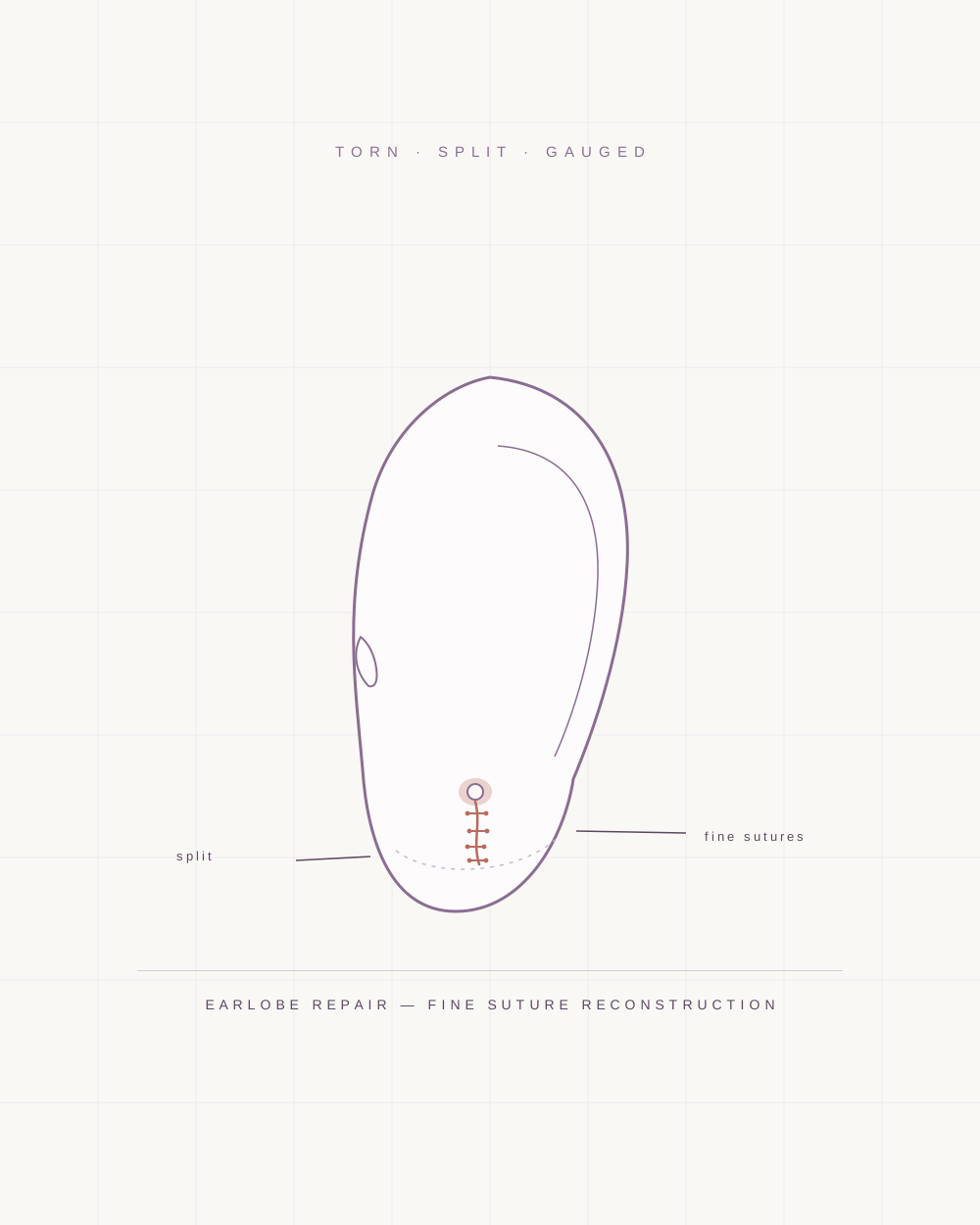
Earlobe repair — split earlobe reconstructed with fine sutures (clinical diagram)
What is earlobe repair?

Earlobe repair is a minor dermatosurgical procedure to restore a torn, split, stretched or elongated earlobe.

The edges of the damaged lobe are gently freshened and brought back together with fine sutures, under local anaesthetic, so the lobe heals as a single, natural-shaped unit. Because healing varies from person to person, the aim — and what is realistic — is discussed honestly at consultation. Re-piercing is usually considered later, with guidance, once the lobe has settled.

The Basics

What is earlobe repair?

Earlobe repair is a minor dermatosurgical procedure to repair a torn, split, stretched or elongated earlobe — and to make re-wearing earrings possible again in many cases.

The principle is simple: the edges of the damaged lobe are gently freshened, then carefully re-apposed — aligned and approximated — with fine sutures under local anaesthetic, so the lobe heals back into a natural shape. The aim is a lobe that looks whole and heals cleanly. Healing is never guaranteed in advance; every lobe heals differently, and that is part of the honest conversation.

Repair is separate from re-piercing. Re-piercing is usually considered only once the lobe has fully healed and been assessed, and it is planned with care about placement, earring weight and any tendency to lift or scar.

Classification

Patterns of Earlobe Damage

Earlobe damage is usually described by what has happened to the lobe: a partial split (a fissure that starts at the piercing), a complete split (cleft to the lower edge), a gauged or elongated hole (thinned by stretching), and raised scarring (keloid or hypertrophic tissue at the piercing site). The pattern — and the state of the tissue — shapes how repair is planned.

More than one pattern can be present at once — a gauged lobe can tear, and a repaired split can scar. The lobe is assessed as a whole before any repair is planned.

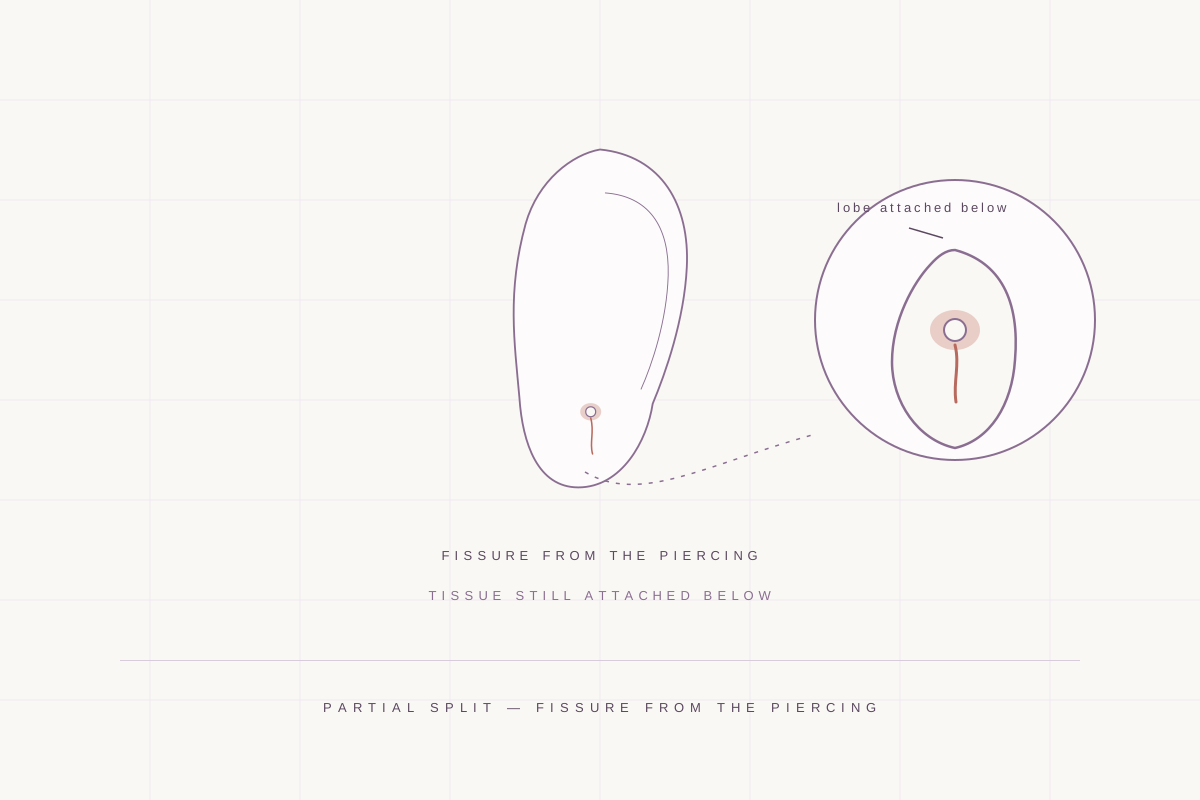
Partial earlobe split — a fissure running from the piercing hole, lobe still attached below (clinical diagram)
I

Partial split

Fissure from the piercing

A split begins at the piercing hole and runs downward partway through the lobe, but the lobe tissue below stays attached. It often follows a snagged or heavy earring. Repair is usually straightforward: when the tissue is good, a single careful closure with fine sutures is typically all that is needed — healing always varies from person to person.

  • Crease or fissure from the hole
  • Earring sits loosely
  • Lobe still attached below
Common cause
Snag or heavy earring
Presentation
Fissure from the piercing hole
Extent
Partial — still attached below
Repair
Usually one careful closure
Scar risk
Higher after repeated tears
Understand earlobule repair
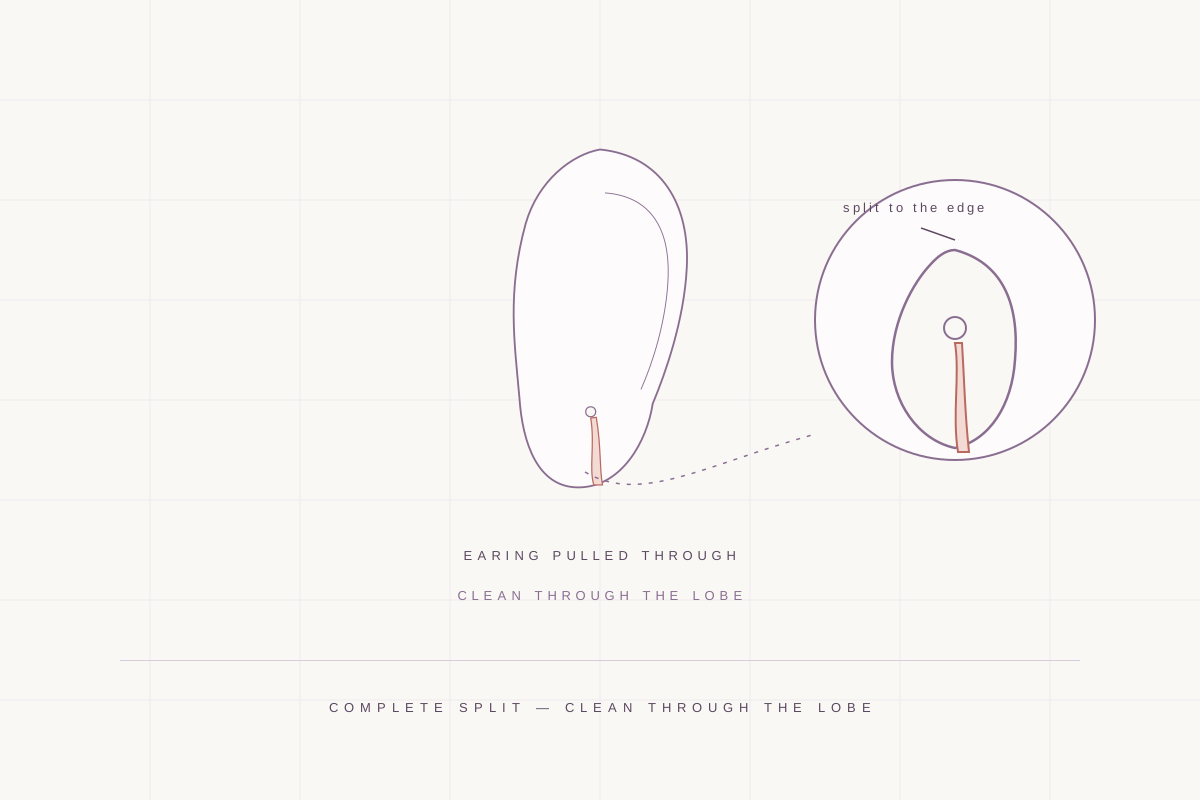
Complete earlobe split — earring pulled through, cleft running clean through the lobe (clinical diagram)
II

Complete split

Split clean through

The earring has pulled through and the split runs from the piercing hole all the way to the lower edge of the lobe, dividing it into two portions. The lobe needs the edges cleaned up and carefully brought back together; because the whole lobe is involved, the closure is planned so that it heals without tension.

  • Split to the lower edge
  • Earring falls through
  • Two separate portions
Common cause
Earring pulled through
Presentation
Cleft through the lobe
Extent
Full split to the margin
Repair
Standard layered closure
Scar risk
Depends on tissue & healing
Explore earlobule repair
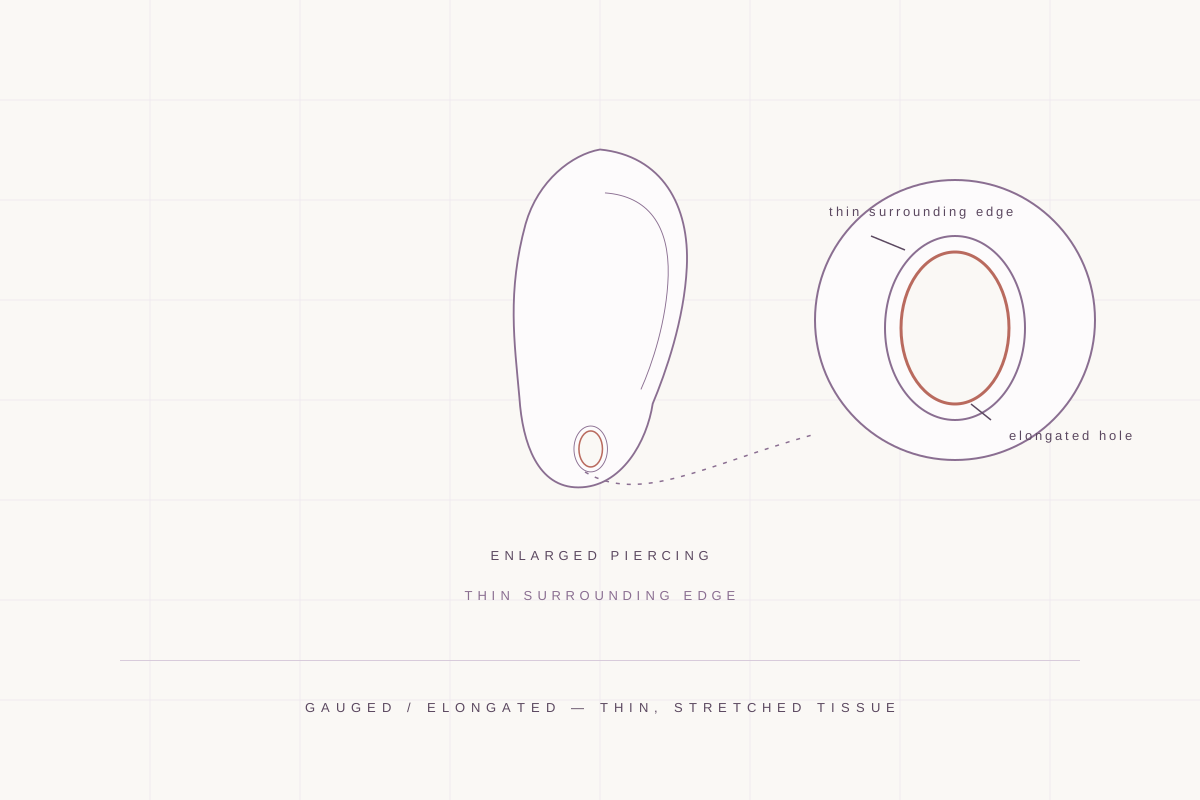
Gauged earlobe — enlarged, stretched piercing with a thin surrounding tissue edge (clinical diagram)
III

Gauged / elongated

Stretched, thin tissue

Years of gauging — or long-term heavy jewellery — stretch the piercing into a larger hole with thin, sometimes inelastic surrounding tissue. Closing a gauged lobe involves excising the stretched tissue and reassembling the lobe into a natural shape. Larger gauges are more involved, and the honest expectation — including lobe thickness and what re-piercing would allow — is discussed first.

  • Enlarged or elongated hole
  • Thin surrounding edge
  • Hole does not shrink on its own
Common cause
Prolonged stretching / gauges
Presentation
Large hole, thin edge
Extent
Variable — size matters
Repair
Excision of stretched tissue, reassembly
Re-piercing
Discussed honestly after healing
Gauged lobe repair
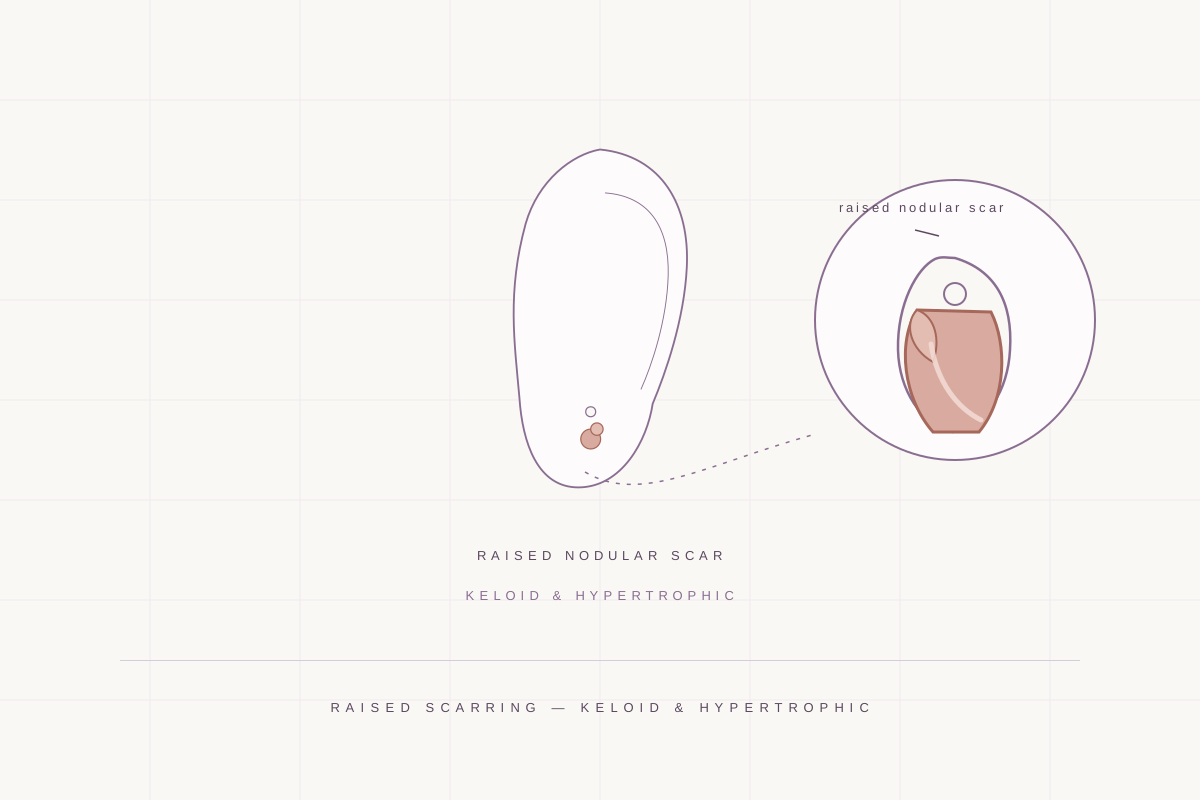
Raised scarring — keloid or hypertrophic scar around an earlobe piercing site (clinical diagram)
IV

Raised scarring

Keloid & hypertrophic

Some people form raised scars at a piercing site — firm, nodular tissue over a healed wound. A keloid keeps growing beyond the wound; a hypertrophic scar stays within it and may settle. Both change how repair is planned and discussed, and scar management becomes part of the conversation — linking directly to the clinic’s scar concern.

  • Firm, raised lump at the piercing
  • May enlarge over time (keloid)
  • Itch or tenderness possible
Presentation
Raised lump at the piercing
Pattern
Keloid grows beyond; hypertrophic may settle
Assessment
Scarring tendency noted first
Repair
Scar-management conversation before repair
Related care
Scar management at the clinic
Earlobule repair & scars Raised & surgical scar care
The Mechanisms

What causes a torn earlobe?

An earlobe tears when it is pulled harder than the tissue can take — or is stretched so long that it thins and gives way.

Heavy or snagged earrings are the most common trigger: a caught or pulled earring can tear the piercing. Sudden pulls matter too — a young child grabbing an earring, hair caught in a ring, or blunt trauma to the ear. Prolonged stretching, through gauges or long-term heavy jewellery, enlarges the piercing and thins the tissue. Some lobes are simply naturally thin and delicate, and a lobe that has healed after an earlier tear is more likely to re-tear along the old scar.

In practice two or three of these often combine — a thin lobe, a heavy earring and one unlucky snag. That history matters for how the repair is planned and how re-piercing is approached later.

What to look for

Earlobe Symptoms & Signs

A damaged lobe rarely announces itself with a single symptom. Most people notice a combination — a loosening earring, a visible line in the lobe, or a lump that grows. In plain language alongside the medical terms:

Visible split or fissure

A crease or gap running downward from the piercing hole

Earring no longer stays in

It falls out, or the lobe gives way under the earring’s weight

Elongated or thinned lobe

An enlarged hole with a thin, wiry surrounding edge

Redness at a fresh tear

Tenderness, swelling or oozing if the tear is recent

Raised scar (keloid)

Firm, nodular excess tissue gathering around a piercing site

The Right Fit

Who is earlobe repair for?

Earlobe repair is for anyone with a torn, split, stretched or elongated earlobe who would like it put right.

That includes people whose earring pulled through and left a complete split, people with a partial fissure they keep catching, people with gauged lobes they want closed and made natural-looking again — and anyone who simply wants to wear earrings without the lobe giving way.

A consultation establishes whether the lobe tissue is good for repair, whether there is anything about your scarring or healing tendency to take into account, and what is realistic for your particular lobe. Not every lobe is a simple case — some need more planning, and that is discussed honestly.

Assessment

How is a damaged lobe assessed?

Assessment is a careful clinical examination of the lobe — no scans or investigations are needed for a torn earlobe.

The dermatosurgeon looks at whether the tear is fresh or has already healed, the quality and thickness of the tissue, whether the split is partial or complete, and whether there is any sign of an existing scar, keloid tendency or infection. When the tear is fresh, timing is discussed — a recent tear can often be repaired more directly than a long-settled one.

Medical history is reviewed as well — how you usually heal, any tendency to raised scars, and whether the lobe has been pierced or repaired before. That history drives the plan: the repair itself, the aftercare, and how re-piercing is handled later.

The Plan

Earlobe Repair

Earlobe repair is done as a minor procedure under local anaesthetic, with fine sutures and careful aftercare. The three parts below are the shape of it; the detail is tailored to your lobe, and your healing, at consultation.

01

The Procedure

The lobe is numbed with local anaesthetic, so the area is comfortable for the repair. The edges of the tear or stretched tissue are very gently freshened to give clean healing surfaces, then carefully brought together and held in place with fine sutures. The closure is layered, so the edges sit in a natural shape with minimal tension as they heal.

02

Aftercare & healing

Keep the repaired lobe clean and dry and follow the aftercare you are given. Fine sutures are usually removed around a week later. During healing, avoid pressure on the ear, avoid sleeping directly on that side, and do not wear earrings until the lobe has settled.

03

Re-piercing & scar care

Re-piercing is a separate decision, made later and with guidance — placement, size and earring weight all matter. If you scar easily or a keloid has developed, this is discussed honestly, because a new piercing carries a similar risk at the new site.

The clinic's earlobe repair protocolEar Lobule Repair →
In Delhi

Earlobe Repair in Delhi at Laser Skin Hair Nail Clinic

At Laser Skin Hair Nail Clinic, Gujranwala Town, Delhi, earlobe repair is performed by a dermatosurgeon — within a dermatologist\u2019s day-to-day scope — with the aftercare and follow-up managed in the same clinic. The lobe is examined first, the repair explained plainly, and the healing and re-piercing picture set out honestly before anything is done.

  • Dermatosurgeon-performed repair under local anaesthetic
  • Fine-suture closure planned for a natural lobe shape
  • Aftercare card on departure — cleaning, dressing and follow-up
  • Honest expectations on healing, scars and re-piercing
Clinical perspective
Dr. Shivali SethiDermatologist · Cosmetologist · DermatosurgeonMBBS · DDVL · FACSI
Book an Earlobe Repair Consultation in Delhi +91 99101 95838
Our Approach

How Earlobe Repair Proceeds

I
Consult
The lobe is examined — fresh or healed tear, tissue quality, keloid tendency.
II
Prepare
The area is cleaned and local anaesthetic is given for comfort.
III
Repair
Edges freshened and re-apposed with fine, layered sutures.
IV
Heal
Keep it clean and dry; sutures out around a week; avoid pressure.
V
Re-pierce
Later, with guidance on placement, size and earring weight.
Dr. Shivali Sethi

Dr. Shivali Sethi

Earlobe repair in Delhi by a dermatosurgeon — careful technique, fine sutures, and honest guidance on healing and re-piercing.

MBBSDDVLFACSIDermatosurgeon
Three different things

Partial vs Complete Split vs Keloid

The three patterns are handled differently, and knowing which one you have shapes the repair. A keloid adds a scar-management conversation before any repair.

1Fissure from the piercing

Partial split

The hole has cracked downward, but the lobe is still attached below. Repair is usually a single careful closure — simpler when the surrounding tissue is good.

2Clean through the lobe

Complete split

The earring has pulled through and the split runs to the lower edge. The lobe is reassembled with a layered closure, planned so it heals without tension.

3Raised scar forming

Keloid

Firm, nodular scar tissue gathers at the piercing site. Any repair is planned alongside scar management, because re-injury and new piercings carry a similar risk.

Scar treatment →
The Everyday

Aftercare & Prevention

How you care for the lobe in the weeks after repair matters as much as the sutures. Once healed — and once re-pierced — the same common-sense rules protect the result.

After Repair

Keep the lobe clean and dry → follow the cleaning and dressing guidance → gentle care, no tugging

Keep earrings off the lobe until it is assessed as healed — this is usually several weeks or more, depending on healing.

At Night

Avoid sleeping directly on the repaired side → no pressure or friction on the lobe → clean hands if you need to touch it

Once healed and re-pierced: sensible earring weight, and remove earrings before sleep and sport to reduce the chance of another tear.

Avoidables

What Can Make a Torn Lobe Worse?

A repaired lobe is delicate for a while. Some habits do not just slow healing — they undo it, or put the next tear in place.

  • Wearing heavy earrings too early, before the lobe has settled
  • Re-piercing too soon — or in the same line as the old split
  • Pulling or snagging the lobe during the healing weeks
  • Missing follow-up for suture removal and review
  • Ignoring an early keloid as it appears
The Right Time

When Should You See a Dermatologist for a Torn Earlobe?

See a dermatologist when a tear is fresh and needs a clean repair, when an old split has healed on its own but you would like the lobe restored, or before any re-piercing after repair.

Book a Consultation
  • 01A fresh tear that should be repaired cleanly, early
  • 02An old split that healed on its own and will not stay closed
  • 03A gauged or elongated lobe you would like closed
  • 04A keloid or raised scar forming at a piercing or repair site
  • 05Wanting guidance before re-piercing after repair
False Friends

Earlobe Myths: What Is Actually True?

A torn earlobe can never be fixed.

Not true. A torn or split lobe can usually be repaired with careful dermatosurgical closure under local anaesthetic. Outcome and healing vary from person to person — which is exactly what the consultation is for.

Repair costs more than it is worth — it is a big surgery.

It is a minor procedure on the lobe itself, done under local anaesthetic — not a major operation. At this clinic it is performed by a dermatosurgeon, within dermatology’s scope.

You can never wear earrings again after repair.

Many people can wear earrings again once the lobe has healed and re-piercing is planned with guidance. Whether you can — and how the piercing should be done — is decided honestly at assessment.

Any parlour can fix it.

A torn lobe is a wound on living tissue that must heal cleanly. Whether the tear is closed correctly — placement, sutures, tension, aftercare — affects the result, so who repairs it matters.

Healing is the same for everyone.

It is not. Healing and scarring vary with the lobe, your skin and your healing tendency. Expectations are set individually, not promised as a fixed outcome.

Questions & Answers

Frequently Asked Questions About Earlobe Repair

The questions patients ask most often — answered directly, without the jargon.

01

What is earlobe repair?

Earlobe repair is a minor dermatosurgical procedure to restore a torn, split, stretched or elongated earlobe. The edges of the damaged lobe are gently freshened and brought back together with fine sutures under local anaesthetic, so the lobe heals in a natural shape.

02

Is earlobe repair painful?

The lobe is numbed with local anaesthetic, so the repair itself is comfortable. After the anaesthetic wears off there is usually some tenderness for a few days, which settles with the aftercare you are given.

03

How long does the procedure take?

The repair is done within a single clinic visit, under local anaesthetic. Exact time depends on the lobe — a single simple split is quicker than closure after gauging. You will be told what to expect for your case at consultation.

04

How long does healing take?

Fine sutures are usually removed around a week after the repair. The lobe continues to settle over the following weeks, and you will be advised when earrings and re-piercing can be considered — this varies from one lobe to another.

05

Can I wear earrings after repair?

In many cases yes, once the lobe has healed and been assessed. Earrings should be sensible in weight and positioned with guidance, because any re-piercing puts new stress on the lobe.

06

Can I get re-pierced after repair?

Re-piercing is possible for many people, but it is a separate step taken once the lobe has fully healed. Placement, entry point and earring weight are considered together, because a new piercing carries similar risks to the old one.

07

Can gauged lobes be repaired?

In most cases, yes. The stretched tissue is excised and the lobe is reassembled into a natural shape. Larger gauges are more involved, and the honest expectation — including lobe thickness and what re-piercing would allow — is discussed first.

08

What if I scar easily (keloid)?

Tell your dermatologist. A tendency to raised scars changes the plan: it is discussed honestly, any repair is planned to minimise scar load, and you will not be encouraged toward a new piercing that carries a similar risk.

09

When should I see a dermatologist for a torn lobe?

See one for a fresh tear that should be closed cleanly, an old split that will not stay closed, a gauged lobe you would like closed, a keloid starting to form, or before deciding to re-pierce after repair.

10

Where can I get earlobe repair in Delhi?

At Laser Skin Hair Nail Clinic, Gujranwala Town, Delhi. Earlobe repair is led by Dr. Shivali Sethi (MBBS · DDVL · FACSI), performed as a minor procedural repair with local anaesthetic, careful aftercare and honest guidance on healing and re-piercing. Call +91 99101 95838 or book a consultation.

Begin

Forty-five minutes,
unhurried.

The first consultation is examination first. We tell you plainly what repair can do for your lobe — and what healing, scars and re-piercing realistically involve.