Marks that stayed.

Pigment is the skin remembering what happened to it. Sun. Hormones. A spot squeezed in haste. We listen to the memory, then treat it where treating is wise.

Most common inIndian, South-East Asian skin (IV–V)
Patience requiredTwelve to twenty-four weeks
Our briefCalm the cause before bleaching the effect

Six familiar patterns.

Pigmentation does not arrive as one thing. Each type has its own cause, depth and conversation with treatment. The plates below catalogue the patterns we see most often in Indian skin.

Plate I
I

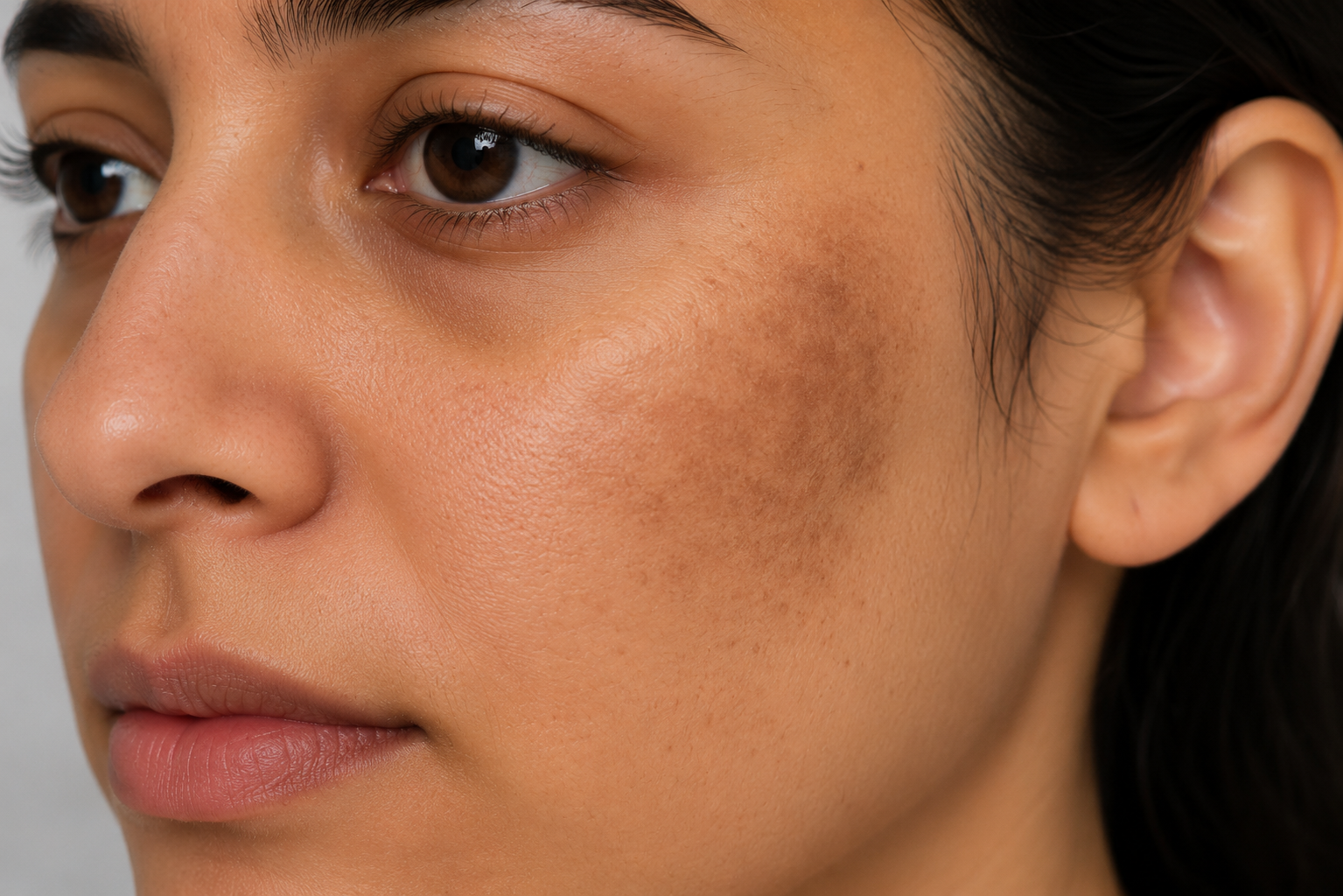
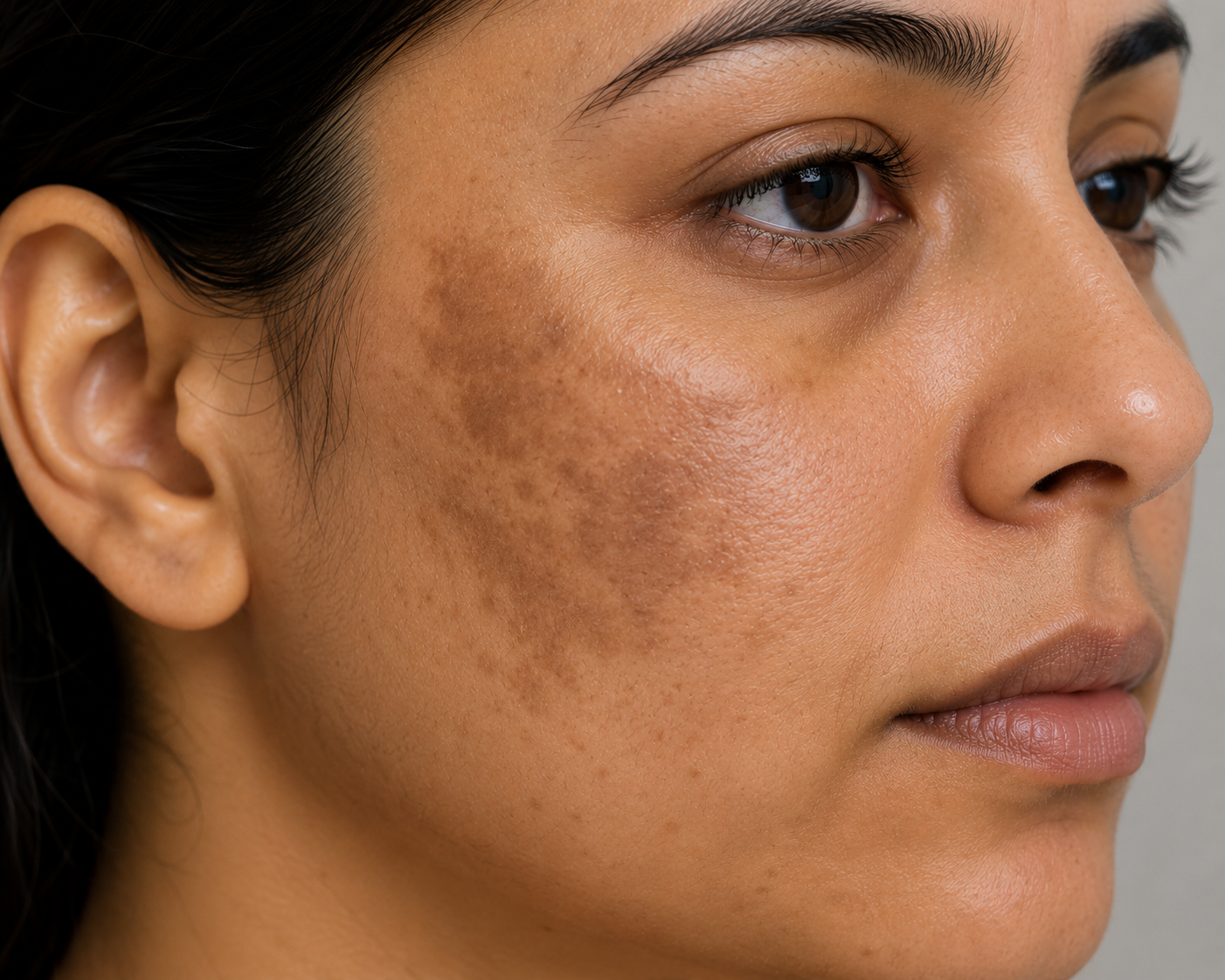
Melasma

The hormonal map

Symmetric brown patches across the cheeks, forehead and upper lip. Pigment that reads hormones like a barometer — triggered by pregnancy, contraceptives, or thyroid imbalance.

Cause
Hormonal
Pattern
Symmetric
Depth
Mixed
Timeline
4–6 months
Plate II
II

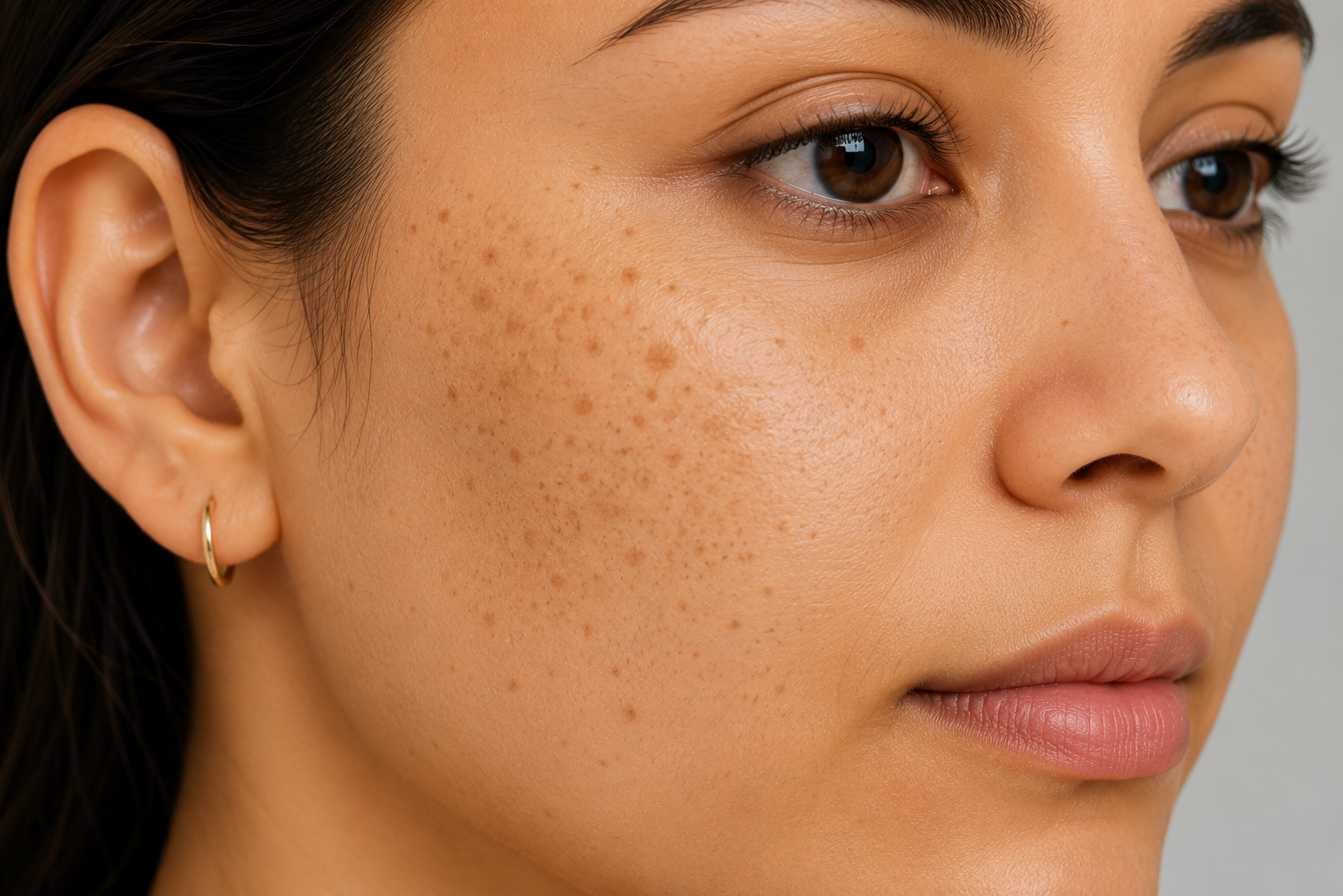
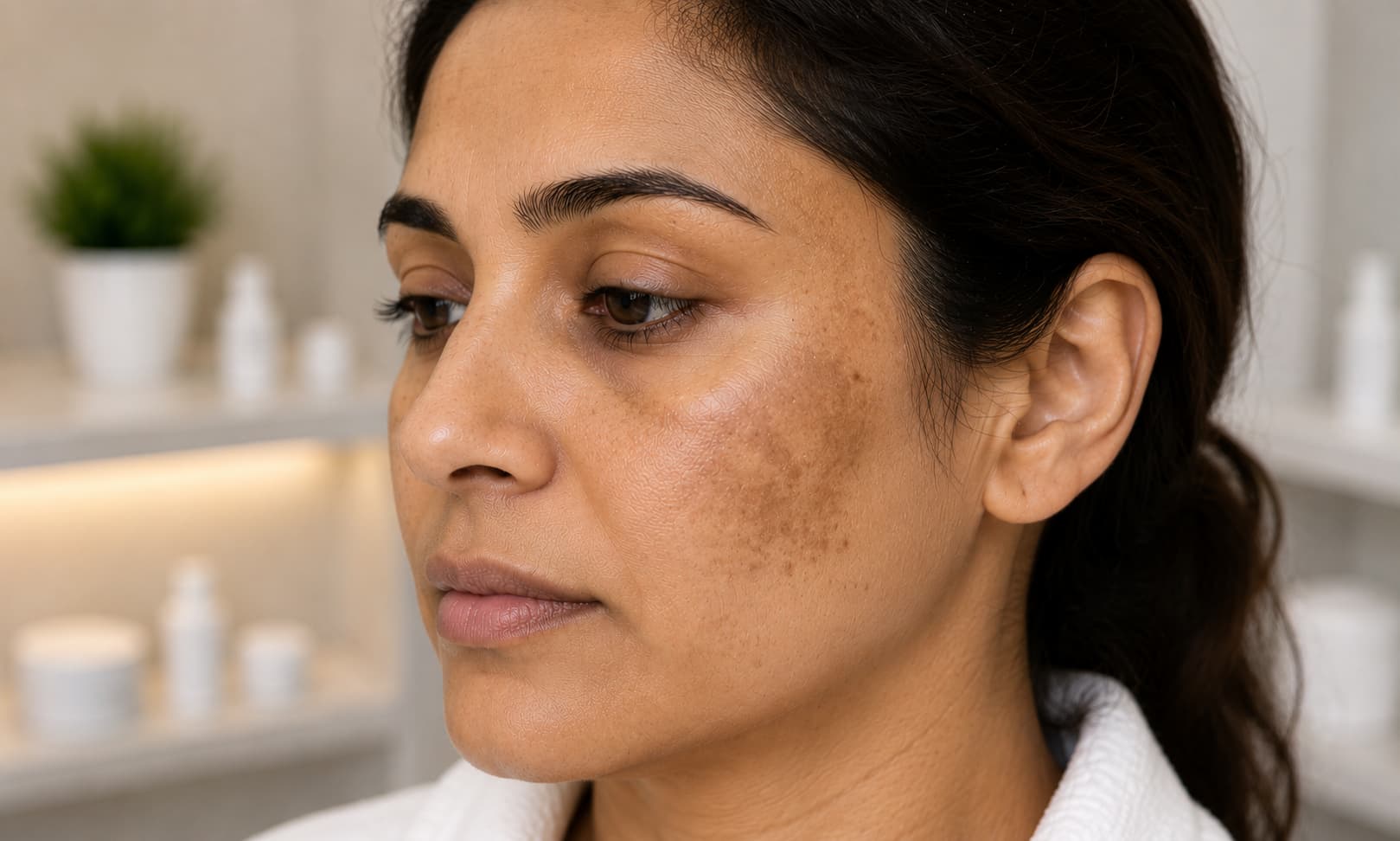
Sunspots

The sun's ledger

Discrete, well-defined brown spots on cheekbones and temples — the skin's slow accounting of every unprotected hour outdoors. Also called solar lentigines.

Cause
UV exposure
Pattern
Scattered
Depth
Epidermal
Timeline
8–12 weeks
Plate III
III

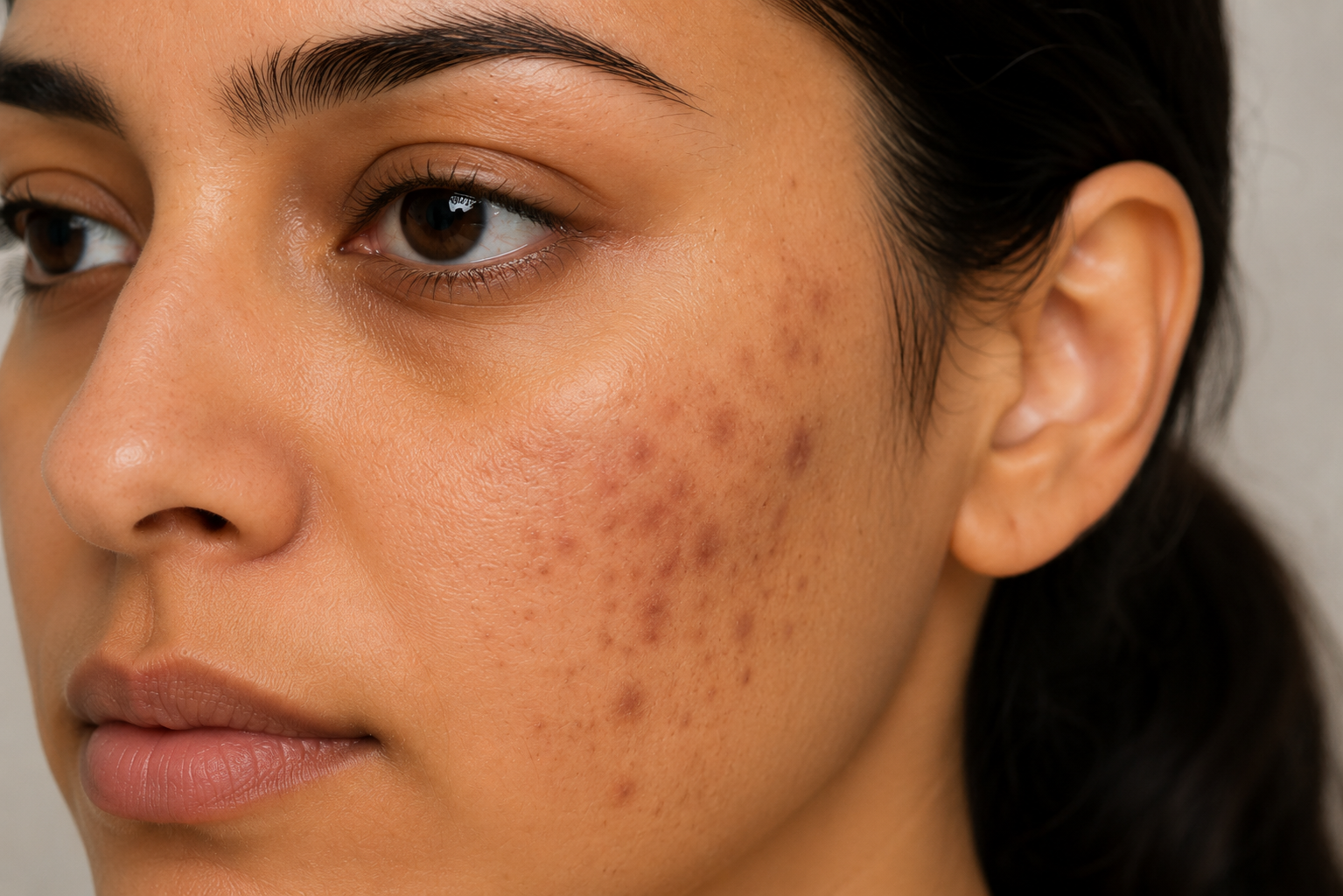
Post-inflammatory

Footprints of healed harm

Brown marks following acne, eczema or any inflammation. The skin remembers an injury long after it heals — particularly in Indian skin, where inflammation marks readily.

Cause
Inflammation
Pattern
Localised
Depth
Mixed
Timeline
3–6 months
Plate IV
IV

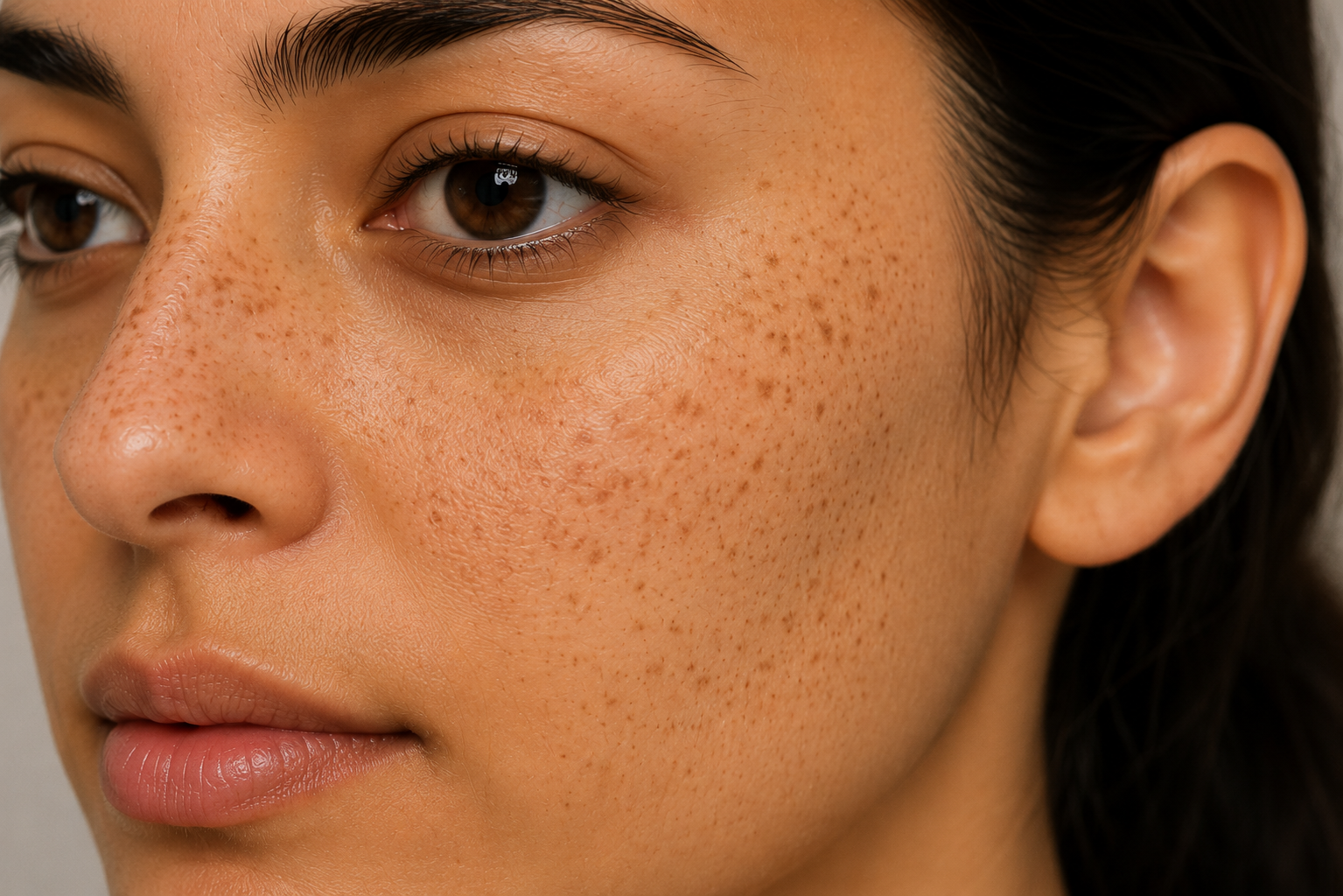
Freckles

A genetic dusting

Fine, golden-brown stippling across the nose and cheeks — genetic, sun-responsive. They darken in summer, fade in winter; not pathological, but treatable if undesired.

Cause
Genetic + UV
Pattern
Even stippling
Depth
Epidermal
Timeline
6–10 weeks
Plate V
V

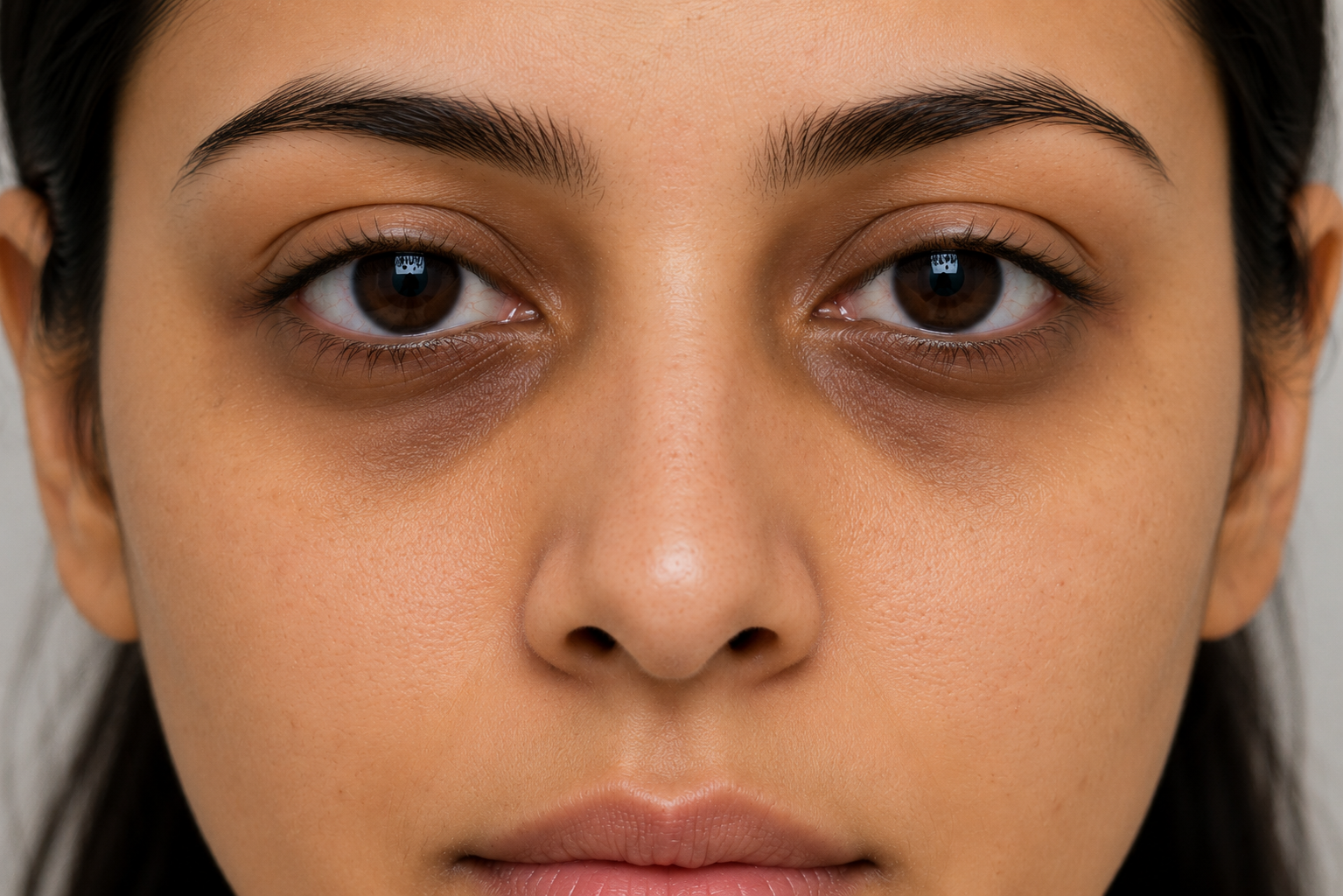
Dark Circles

Periorbital shadow

A composite — pigment, blood vessels, hollowing of the tear-trough. Examining which of the three is dominant determines whether we treat with topicals, PRP, or filler.

Cause
Multifactorial
Pattern
Bilateral
Depth
Dermal
Timeline
6 months+
Plate VI
VI

Perioral

A ring around the mouth

Darkening around the lips, often misread as a moustache shadow. Driven by friction (waxing, threading), hormones, or sun — usually a combination needing patience.

Cause
Friction & hormonal
Pattern
Circular
Depth
Mixed
Timeline
4–6 months

Skin in section.

Depth determines difficulty. The same brown mark — superficial or deep — requires very different work, and very different patience. Examination under a Wood's lamp settles it.

EpidermisDermisSubcutis
Epidermal · Layer 1

On the surface

Pigment sits in the upper layer of skin — freckles, sunspots, post-inflammatory marks. Responds well, and relatively quickly, to topicals and gentle resurfacing.

Easier — 8 to 12 weeks
Mixed · Layer 2

Surface and below

Pigment in both layers — most cases of melasma sit here. Responds, but slowly, to combined oral, topical and energy-based treatment. Sun protection is non-negotiable.

Patient — 4 to 6 months
Dermal · Layer 3

Deeper, structural

Pigment within the dermis itself — long-standing PIH, nævus of Ota. Requires the careful use of specific lasers; not all pigment in this layer can be removed.

Slow — six months and beyond

Pigment does not arrive uninvited.

For every persistent mark, there is a cause keeping it persistent. The work begins with calming the trigger, not bleaching the surface.

80%

Sun (UV-A)

Of pigmentation in Indian skin is triggered or worsened by ultraviolet exposure — including, crucially, the UV that passes through window glass. Daily SPF is half the prescription.

IJDVL · Pigmentary disorders
70%

Hormones

Of melasma cases are linked to pregnancy, oral contraception, or thyroid changes. Treating the skin without addressing the hormonal trigger is treating a symptom in isolation.

JAAD · Melasma review
3x

Inflammation

Indian skin is up to three times more likely to mark following acne, eczema or any injury. The discipline is not to provoke — through harsh actives or aggressive treatment.

Clinic data, 2018–2024
60%

Visible Light

Of post-treatment darkening can come from ordinary daylight — not just UV. We protect against visible light too, using tinted sunscreens with iron oxide.

Photochem Photobiol

Three principles, across every patient.

I

Calm the cause first.

Before any laser, peel or topical, we identify what is keeping the pigment present — UV, hormones, friction, inflammation. Without that, every result is temporary.

Cause before effect
II

Topicals, well-sequenced.

A considered routine — gentle tyrosinase inhibitors, a vitamin C in the morning, a retinoid at night, and a sunscreen worn like a watch. The boring parts do most of the work.

Topical-led
III

Energy, only when ready.

Q-switched and pico lasers, fractional resurfacing, and chemical peels — used selectively, not as the opening move. The wrong laser at the wrong moment will make Indian skin darker.

Energy-based · only when wise

What we typically recommend.

Condition
Typical Protocol
Detail
Melasma
Triple combination topicalOral tranexamic acidQ-switched laser (gentle)Strict SPF
Sunspots (Lentigines)
Q-switched Nd:YAGGlycolic peelTopical lightening
Post-inflammatory PIH
Tyrosinase inhibitorRetinoidPico laser (case-by-case)
Freckles
SPF disciplineQ-switched laser (selective)
Dark Circles
Vitamin K + caffeinePRP under-eyeHA filler if tear-trough
Perioral Pigmentation
Reduce friction (waxing/threading)Glycolic peelTopical regimen
We don't bleach skin into submission. We listen to what the pigment is recording — sun, hormones, friction — and we treat that conversation first.
— Dr Shivali SethiMBBS · DDVL · FACSI

A plan, written for your pattern.

The first consultation includes examination under a Wood's lamp so we can map depth, not just colour. The plan that follows is sequenced over months — and we will tell you when to stop.