I
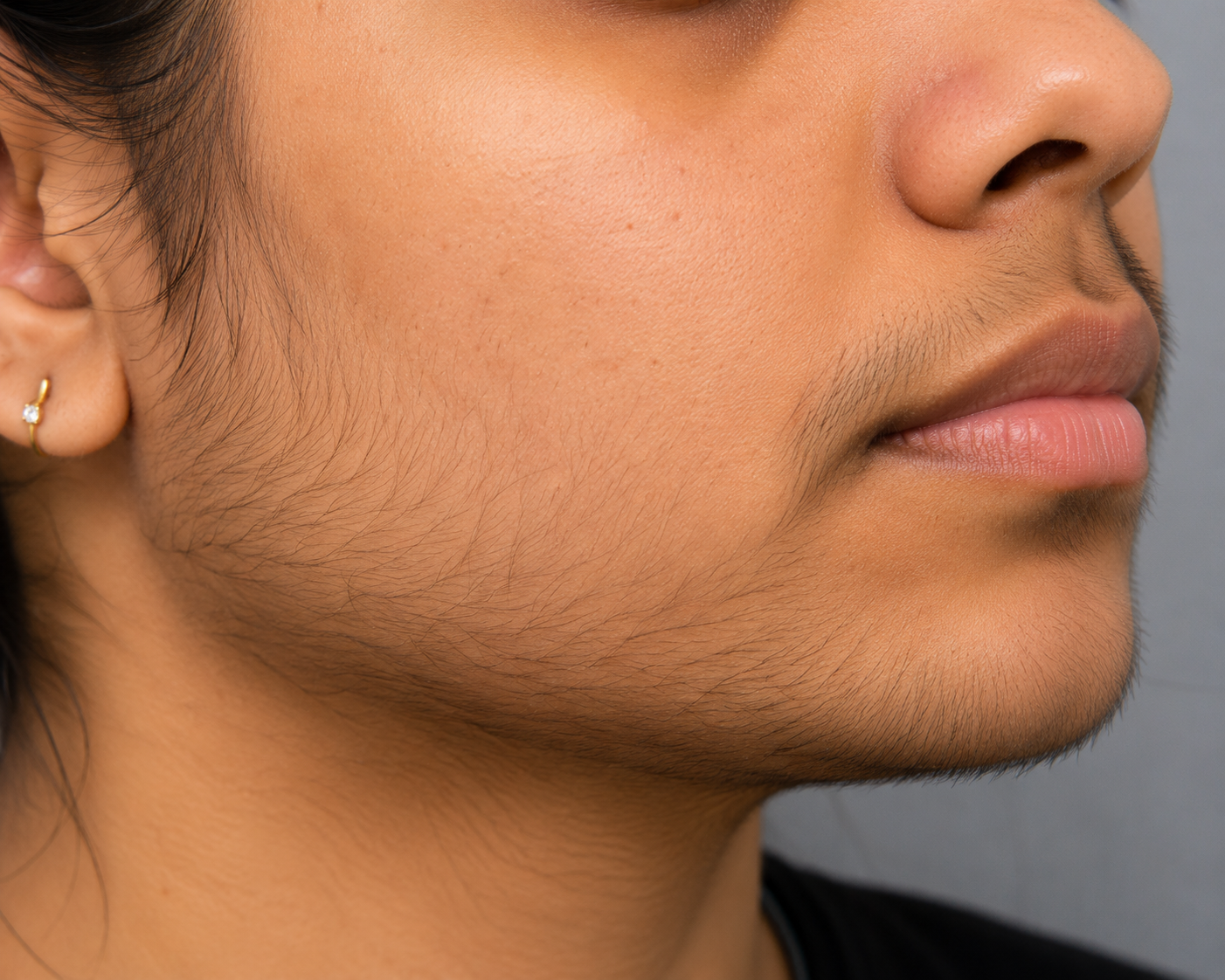
Facial
Upper lip · Chin
Common in PCOS, hormonal contexts, and genetics. Six to eight sessions for a course, then maintenance once or twice yearly.
- Area
- Small
- Sessions
- 6–8
- Maintenance
- Yearly
- Time
- 15 min
Laser hair reduction is straightforward technology with predictable outcomes — provided the right device, the right protocol, and the right number of sessions. We use diode lasers safe for Indian skin.
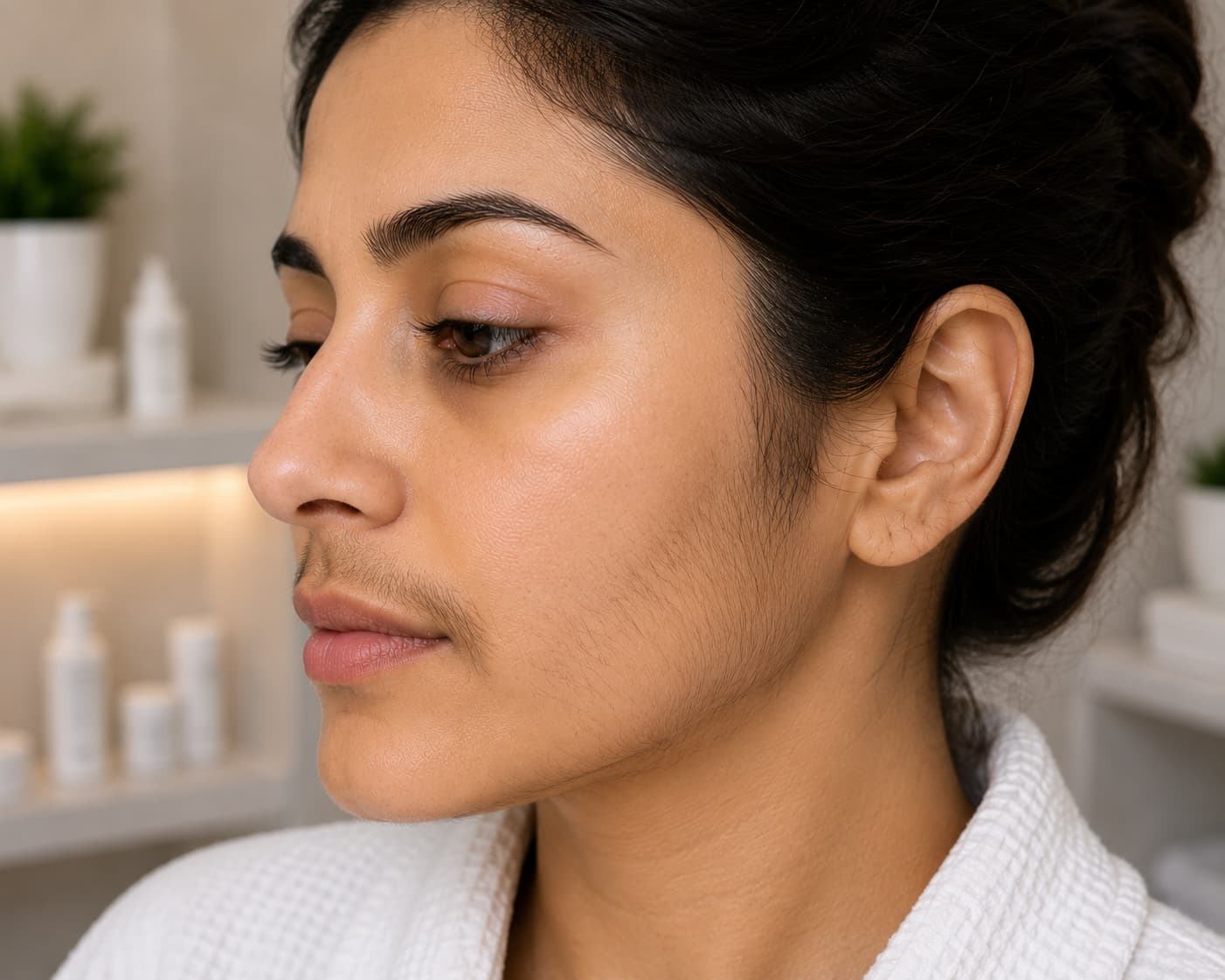
Laser hair reduction targets melanin in the hair shaft — the laser heats the follicle and disables it. The technology is well-established, the safety profile excellent for Indian skin with the right wavelength (diode 800nm or Nd:YAG 1064nm), and the outcomes predictable.
A complete course is six to eight sessions, spaced six weeks apart for the face and underarms, eight weeks for legs and bikini. After this, most patients see eighty percent reduction, with occasional maintenance every twelve to eighteen months.
We will not undertake patients with very fine, light, or grey hair — the laser cannot 'see' it. We will tell you so at the first visit.
Each type has its own cause, depth and conversation with treatment. Hover or tap any plate to read its detail.
Upper lip · Chin
Common in PCOS, hormonal contexts, and genetics. Six to eight sessions for a course, then maintenance once or twice yearly.
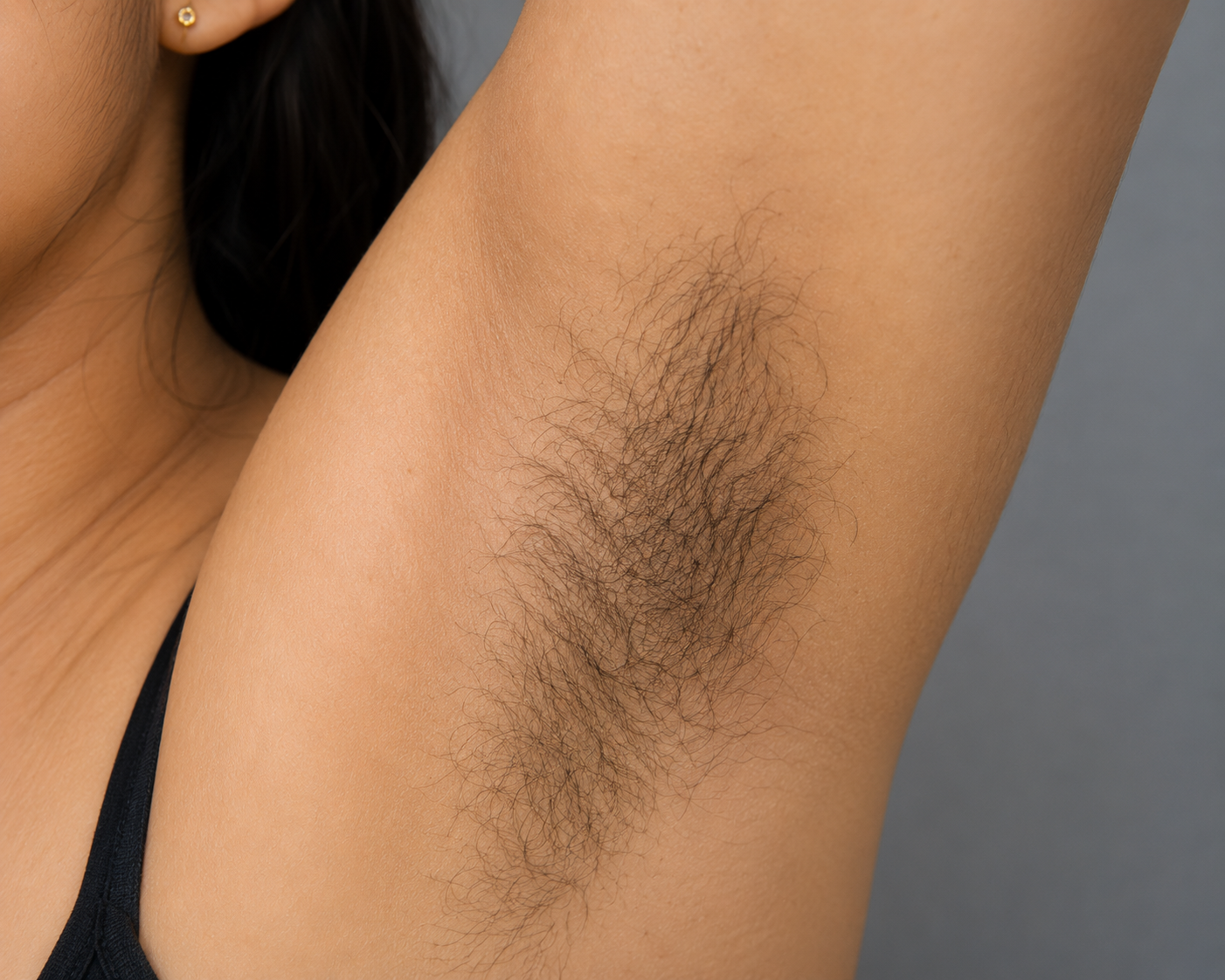
Routine
High-density area that responds beautifully. Five to six sessions typically. Predictable, near-permanent result.
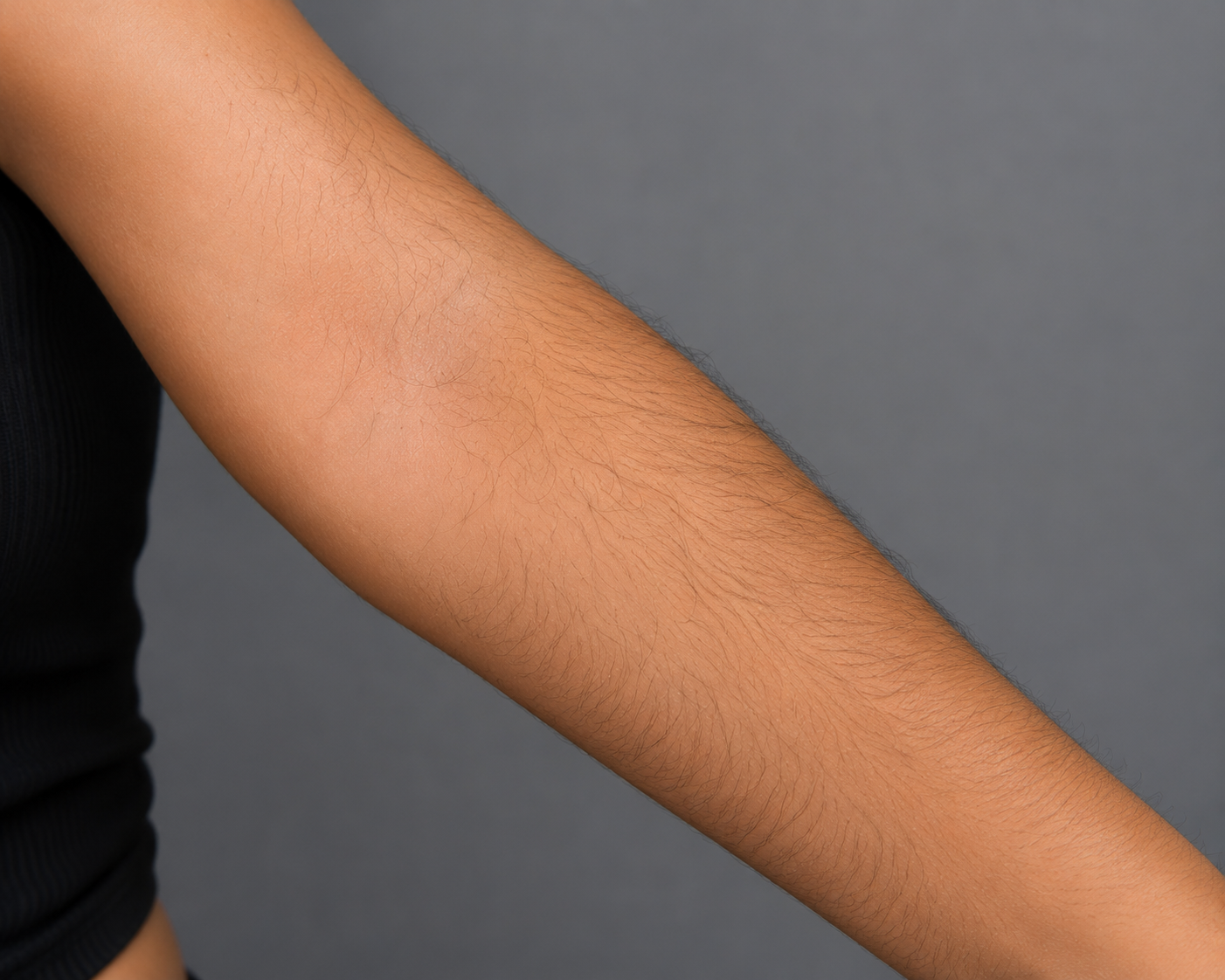
Full length
Less dense than legs; usually responds quickly. Six sessions typical for most patients.
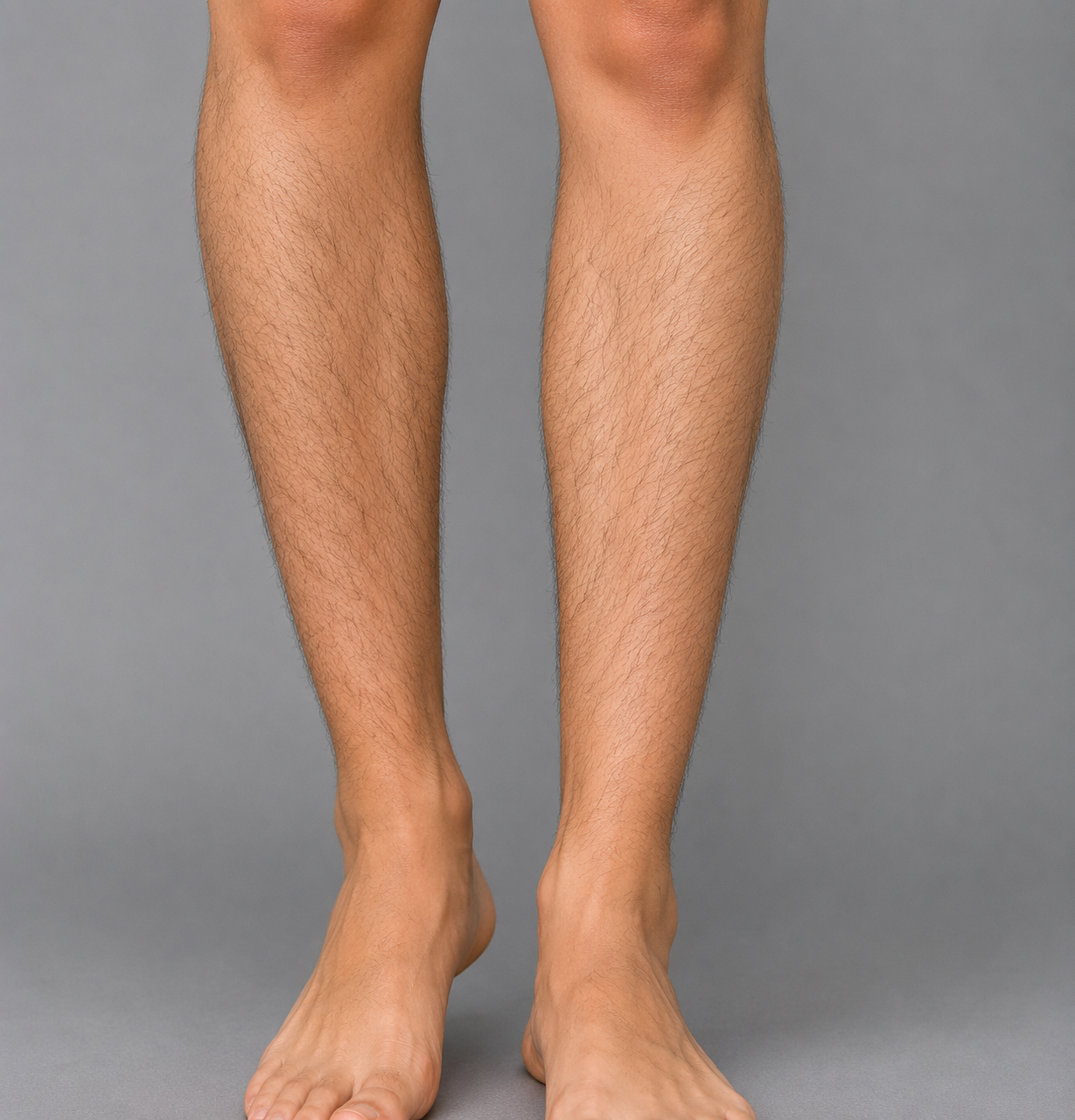
Full or lower
Largest area. Twenty to thirty minutes per session. Eight sessions typical for a full course.
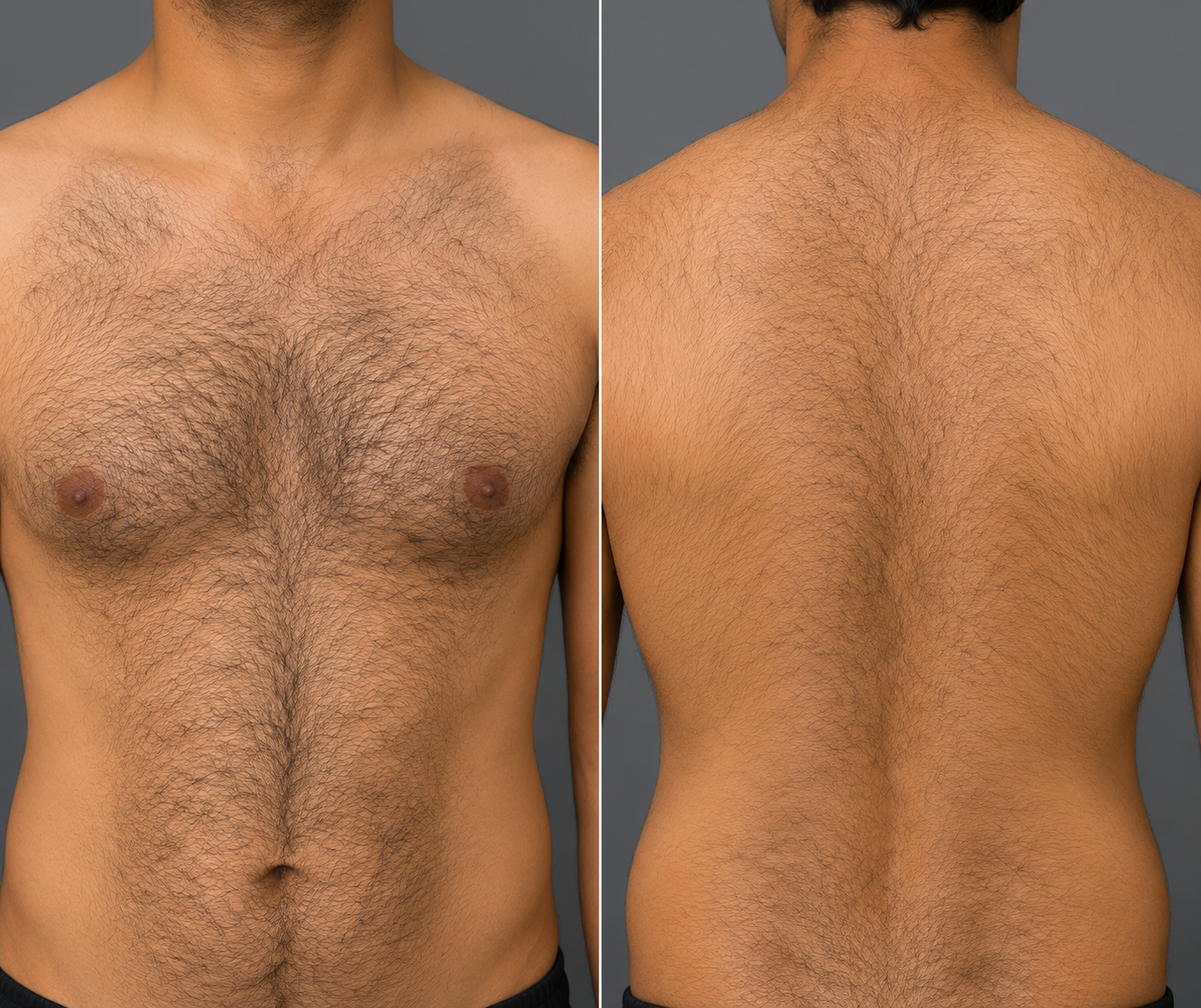
Male presentation
Dense, coarse hair responds well to diode. Eight to ten sessions typical; maintenance more frequent than female patterns.
The treatments most often part of this concern's protocol. Real plans combine two or three, sequenced over months. Tap any to read the detail.
Not certain which concern fits what you are seeing? Browse the full list, or write to the clinic and describe it in your own words.
Twenty-two years of considered dermatology — examined first, prescribed second. The practice has only refined the standard.
The first consultation is examination first. We will tell you plainly what is treatable, what is not, and what a realistic timeline looks like.