Concern · Skin

Eczema, soothed.

Eczema is the name for a family of inflamed, itchy, dry skin conditions — the most common of which is atopic dermatitis. It tends to run a chronic, relapsing course: quiet periods, then flares. Good care is emollient-first: repairing the barrier, calming the flare, and breaking the itch-scratch cycle, in a plan built for the person in front of us.

The patternDry · itchy · inflamed
The methodEmollient first
Our aimBreak the itch cycle
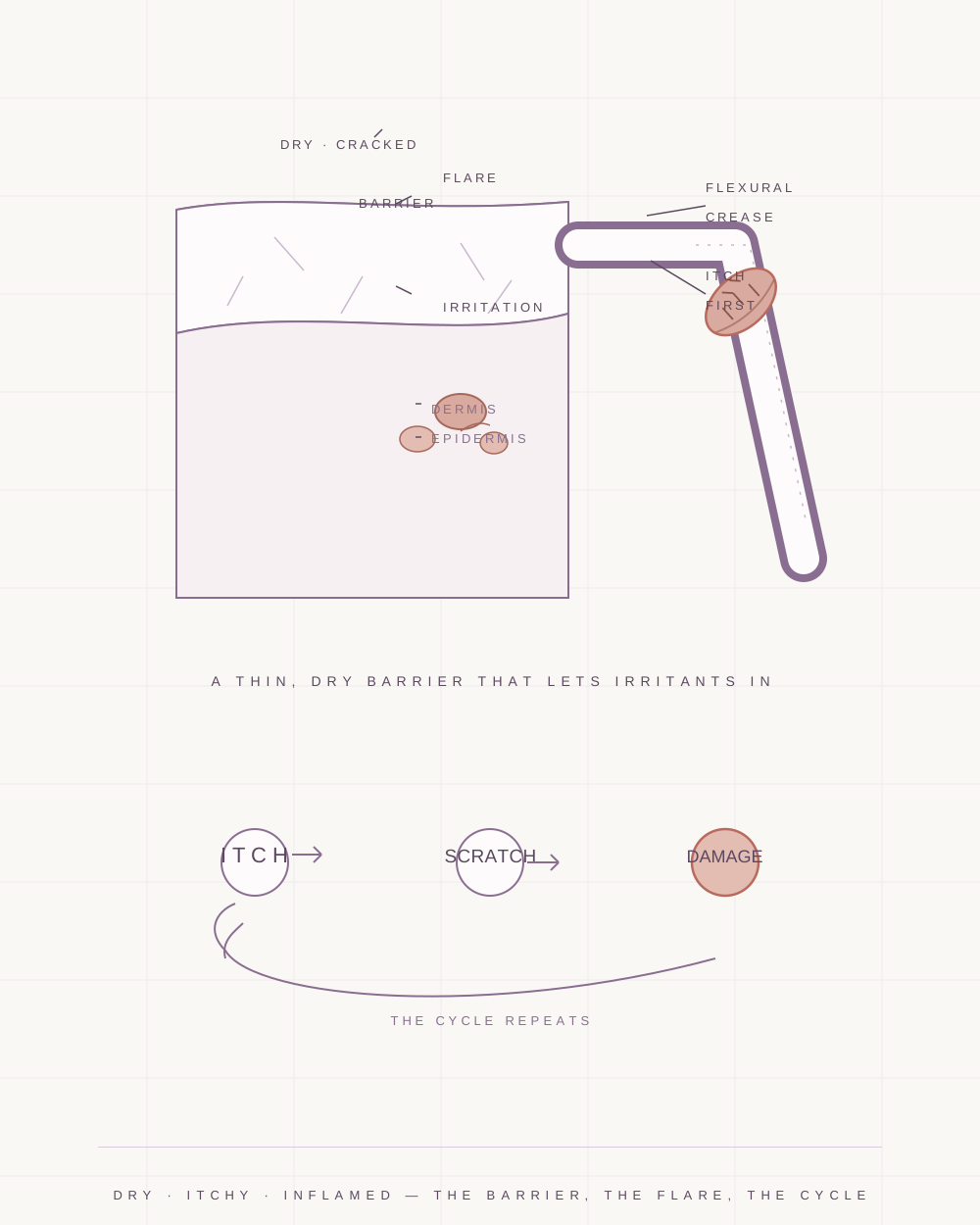
Eczema — dry, itchy, inflamed skin caught in the itch-scratch cycle (clinical diagram)
What is eczema and how is it treated?

Eczema is an itchy, dry, inflammatory skin condition — most commonly atopic dermatitis.

It shows up as dry, red, itchy patches that flare and settle over time, and it is driven by a weakened skin barrier allied to an over-reactive immune response. Treatment is layered: a consistent soothing routine that repairs the barrier, prescribed anti-inflammatory care during flares, and attention to the triggers each person’s skin actually responds to. With dermatologist-led care, eczema can usually be kept comfortable and quiet — the aim is control, not a single ‘cure’.

The Basics

What is eczema?

‘Eczema’ and ‘dermatitis’ are used to describe a group of conditions in which the skin becomes inflamed, itchy and dry — atopic dermatitis is the most common of them.

In atopic eczema, the skin’s outer barrier does not hold moisture well, and the immune response is over-vigilant. Together they produce dry, reactive skin that itches — and scratching worsens the barrier further, feeding a cycle of itch and flare that keeps the skin inflamed.

Because the condition is chronic and relapsing, the work is not a single cream. It is a routine that keeps the barrier comfortable, a flare plan that calms episodes quickly, and honest attention to the triggers that matter for that person’s skin.

Classification

Forms of Eczema

Eczema is described by where it sits and how it behaves: atopic dermatitis in the flexural creases, discoid (nummular) patches, hand eczema driven by exposure, and the delicate face-area patterns. People can have more than one form at once, and patterns shift with age, season and habits.

The forms share a core problem — a dry, reactive barrier — but each responds to care arranged around it. A dermatologist assesses the pattern before prescribing the plan.

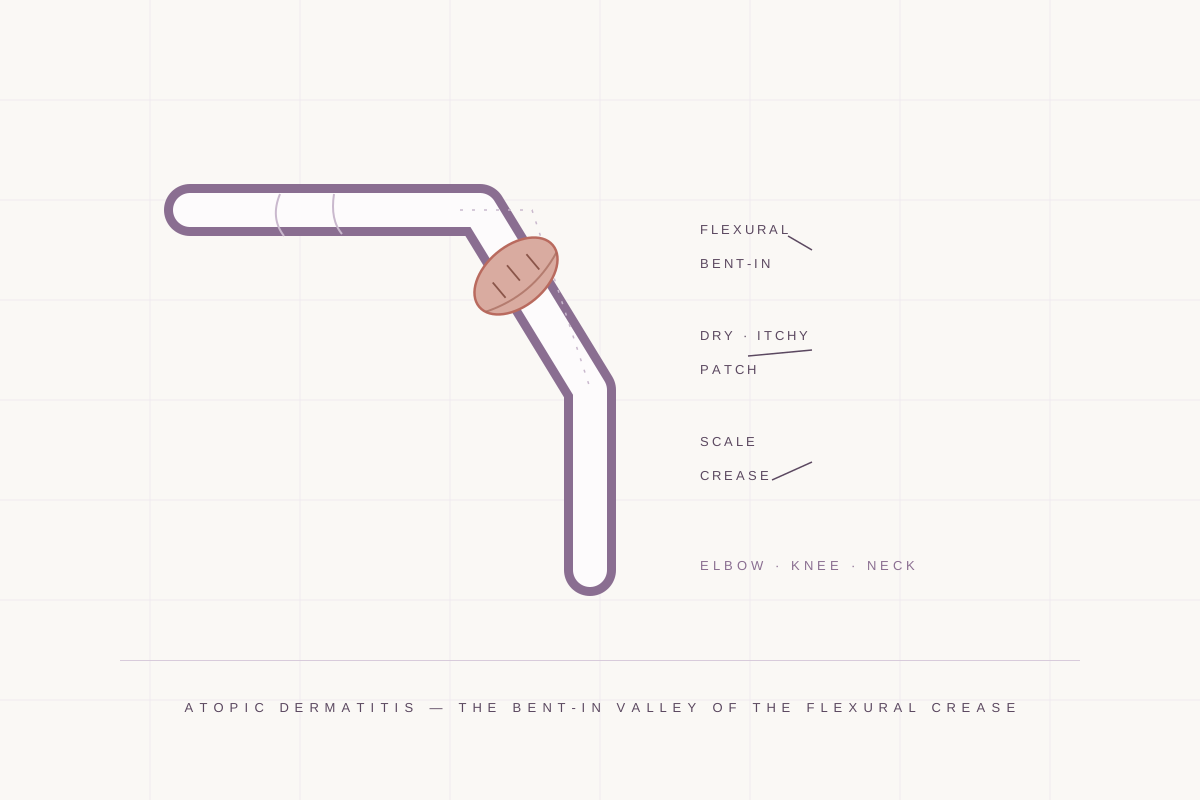
Atopic dermatitis — dry, red, itchy patches in the flexural creases (clinical diagram)
I

Atopic Dermatitis

Flexural & childhood onset

The most common form of eczema. It typically begins in childhood and favours the inner creases — behind the knees, inside the elbows, around the neck and cheeks. The skin is dry and reactive, flares in waves, and improves with a patient routine built around emollience.

  • Itchy dry patches
  • Flexural creases
  • Flares and quiet periods
Typical onset
Childhood, often infancy
Common sites
Elbow & knee creases, neck, cheeks
Key feature
Itch-first, dry, reactive skin
Severity
Mild to severe; relapsing
Scarring risk
Low — itch ’s the battle
Understand the care routine
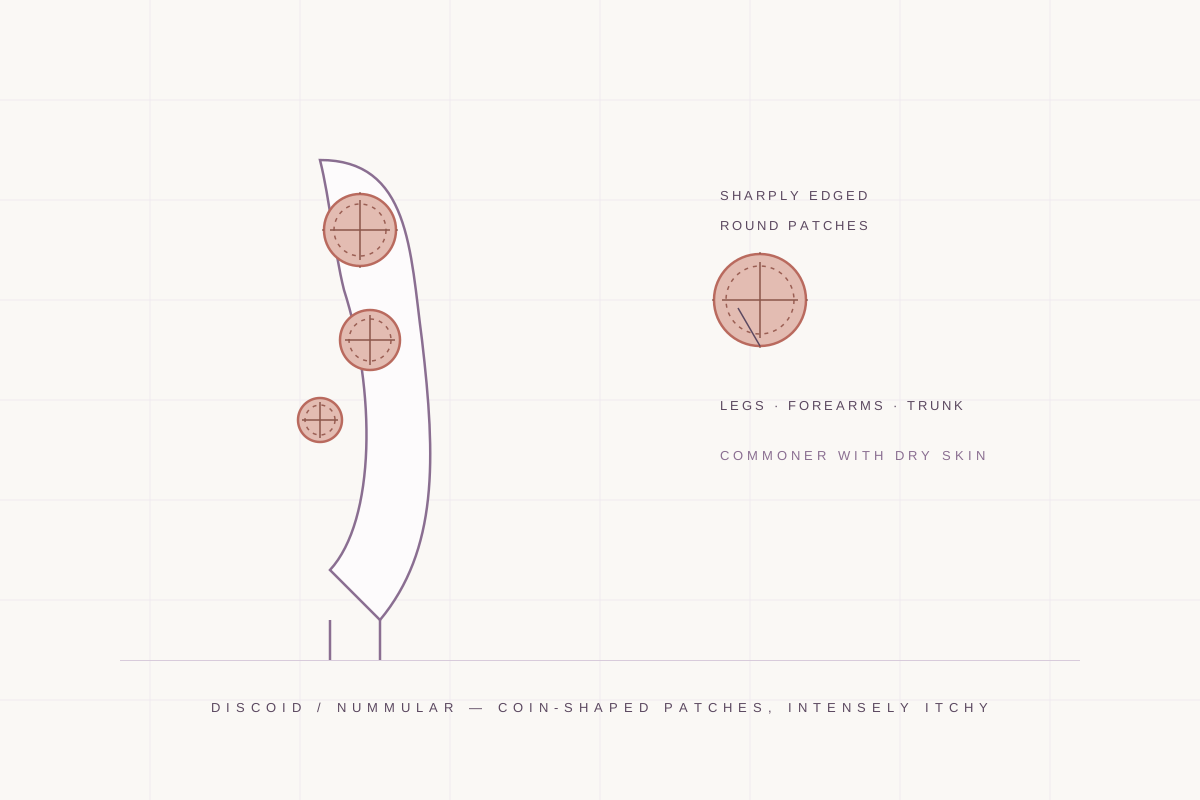
Discoid eczema — coin-shaped, itchy, scaly patches on the lower leg (clinical diagram)
II

Discoid / Nummular

Coin-shaped patches

Nummular (‘coin-shaped’) eczema appears as round, well-defined, intensely itchy plaques, usually on the lower legs, forearms or trunk. It is commoner in adults with dry skin, and often flares in low humidity. The rounded shape distinguishes it from other patterns.

  • Round, coin-like patches
  • Intensely itchy
  • Legs, forearms, trunk
Typical onset
Often adulthood
Common sites
Lower legs, forearms, trunk
Key feature
Well-defined round plaques
Severity
Moderate; flares with dryness
Scarring risk
Low — pigment change possible
Care for discoid eczema
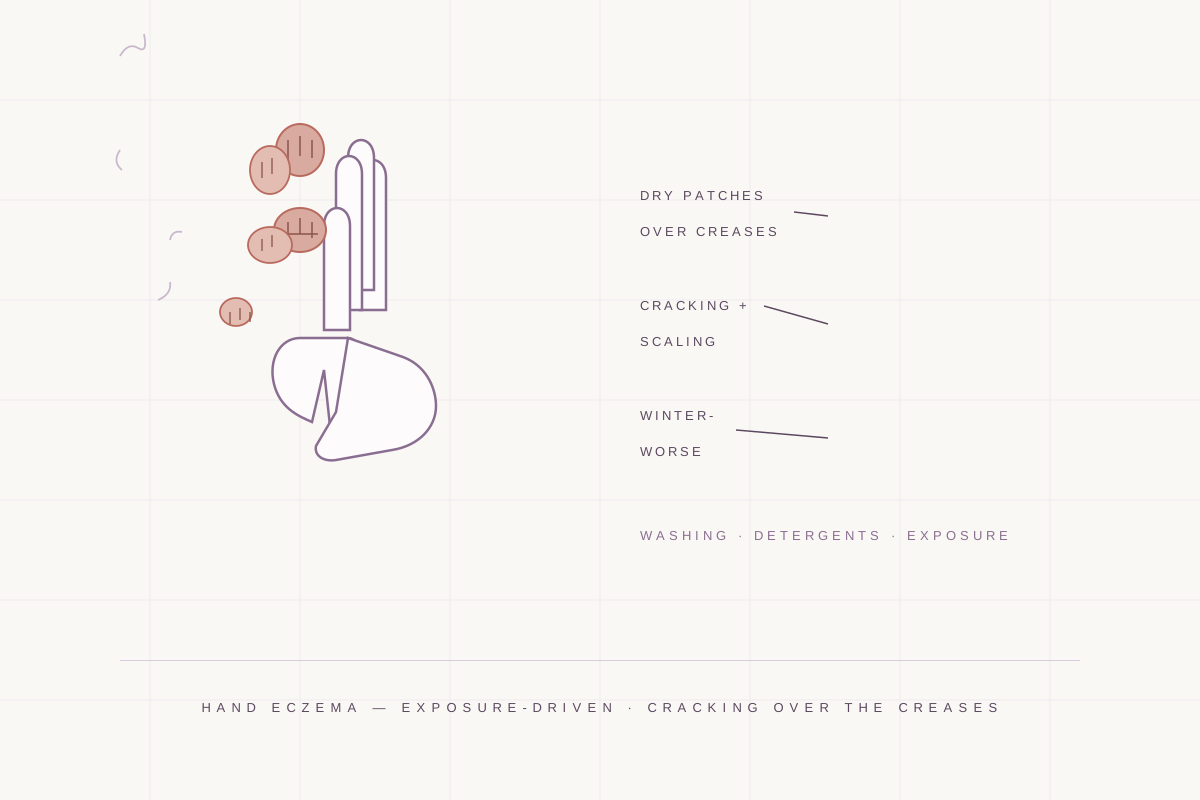
Hand eczema — dry, cracked, reddened skin on the fingers and palm (clinical diagram)
III

Hand Eczema

Irritant & contact

Hand eczema is common where hands meet frequent washing, detergents, chemicals or work exposure. It presents as dryness, cracking and redness — worse in winter — and is often aggravated by the very habits that keep hands clean. Protective skincare and trigger changes are the foundation of care.

  • Dry, cracked skin
  • Redness on fingers & palm
  • Winter-worse
Typical onset
Any age; often work-linked
Common sites
Fingers, palms, back of hands
Key feature
Exposure-driven
Severity
Mild to severe
Scarring risk
Low — fissures can sting
A hand eczema assessment
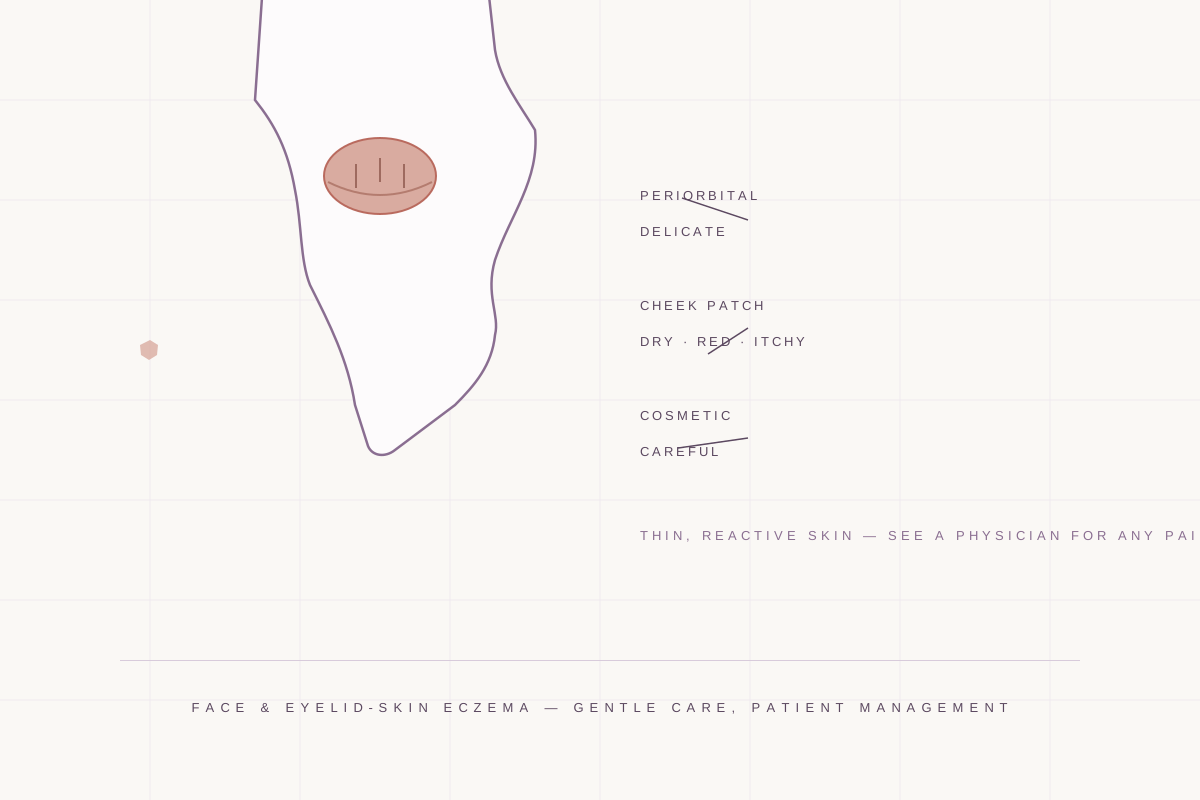
Face and eyelid-skin eczema — dry, red, delicate patches on the cheek and around the eye (clinical diagram)
IV

Face & Eyelid-Skin Eczema

Delicate, allergy-prone

The skin of the face — especially around the eyes — is thin and sensitive, so eczema there flares readily with cosmetic, fragrance or airborne triggers. Because the area is so visible, it causes real distress. Care is gentle by design: soothing routine, careful trigger work, and steady, patient management.

  • Dry, red face patches
  • Delicate eye-area skin
  • Cosmetic triggers
Typical onset
Any age
Common sites
Cheeks, around the eyes
Key feature
Thin, reactive skin
Severity
Mild to moderate
Scarring risk
Low — pigment change possible
Gentle face-area care
The Mechanisms

What causes eczema?

Eczema is not caused by a single thing — it sits at a meeting point of skin structure and environment.

The skin barrier holds less moisture and lets irritants in more easily, while the immune response in the skin runs hot. Around this, common external influences can tip dry skin into a flare: low humidity, harsh soaps and detergents, woollen fabrics, sweat, skin infections, and airborne or cosmetic allergens. Stress can amplify itching and flaring in many people.

Diet is relevant for some people — certain foods can trigger eczema in specific individuals, most often young children — but it is rarely the whole story. Where dietary factors genuinely matter, they are discussed as part of an individual assessment, not handed out as a blanket list.

What to look for

Eczema Symptoms & Signs

Eczema rarely announces itself as a single lesioned spot. It arrives as a pattern of dry, itchy reactivity that flares and rests. In plain language alongside the medical terms:

Itching

The central symptom — often worse at night

Dry, rough patches

Skin that feels sandpaper-like, especially in flares

Redness

Inflammation that settles in waves

Scaling or flaking

Visible dryness on the surface

Weeping or crusting

During active flares, sometimes with small blisters

Thickened skin

Lichenification — skin roughens from repeated scratching

Sleep disturbance

Itch can break sleep badly, especially for children

Oozy patches

Weeks that need gentle, consistent care

Background complexion

An atopic look — dry, pale, easily irritated skin

Seasonal shifts

Winter flaring, gentle summers

Across Ages

Who can get eczema?

Eczema is most often a condition of childhood, but it belongs to no single age.

Atopic dermatitis typically begins in infancy or early childhood, and while many children grow out of the worst of it, a substantial number carry sensitive skin — or fully active eczema — into adult life. Many adults without a childhood history develop hand eczema or contact patterns through exposure and habit. A family tendency to eczema, asthma or hay fever (atopy) is common.

Whatever the age of onset, eczema is assessed on its own terms — the pattern, the triggers, and the routine that surrounds it — rather than treated as one fixed formula.

Assessment

How is eczema diagnosed?

Most eczema can be recognised on history and examination together.

A dermatologist typically considers the location of the patches (creases, hands, face), their dry and itchy character, how long the cycle has run, and whether there is a history of atopy — eczema, asthma or hay fever in the person or family. Skin that is generally dry and reactive supports the picture. Allergy or patch testing is not needed for everyone; it is arranged only when a specific allergic trigger is genuinely suspected.

One thing to act on early: eczema that becomes weeping, crusted or unusually painful may be infected (a common complication) and should be reviewed promptly rather than left for a ‘bad eczema week’.

The Plan

Eczema Care & Treatment

There is no single ‘best’ eczema treatment. The right plan depends on the pattern, the skin, the age of the person, and the triggers in their life. Care is layered — emollience as the base, anti-inflammatory care for flares, prevention for the long term — supervised and adjusted by a dermatologist over time.

01

Skin Repair & Emollience

The foundation of every eczema plan. A consistent routine of gentle cleansing and rich moisturising restores what the barrier loses. Emollients are not an afterthought — in much of eczema care they carry most of the work, applied habitually even when skin looks calm. How to bathe, when to moisturise, and which consistencies suit which skin are worked out at consultation.

02

Flare Control

When skin flaring needs to be calmed, a dermatologist may prescribe anti-inflammatory treatment — most often topical corticosteroids matched in strength to the site (thinner skin on the face, thicker on the hands). Used as directed, for the course and follow-up given, they settle flares that emollience alone cannot. Anti-itch support and, where relevant, treatments for secondary infection are added as needed.

03

Prevention & Maintenance

The long game. Identifying and reducing the triggers that matter (detergents, fabrics, cosmetics, stress, seasonal dryness), protecting the barrier through habit, and agreeing flare-readiness with the family or the patient so episodes are caught early. Eczema rebounds when routines stop; maintenance is what keeps it quiet.

Begin with a settlement assessment at the clinicBook an Eczema Consultation in Delhi →
In Delhi

Eczema Care in Delhi at Laser Skin Hair Nail Clinic

At Laser Skin Hair Nail Clinic, Gujranwala Town, Delhi, eczema care begins with a dermatologist-led assessment of the pattern and its triggers before any prescription. We examine, listen to the itch history, and build a written plan — an emollience routine, flare care matched to the site, and honest maintenance — with follow-up as your skin settles.

  • Dermatologist-led assessment of the eczema pattern and triggers
  • A personalised written care plan, not a fixed product list
  • Emollience and flare care matched to your skin and site
  • Follow-up and honest adjustment over time
Clinical perspective
Dr. Shivali SethiDermatologist · Cosmetologist · DermatosurgeonMBBS · DDVL · FACSI
Book an Eczema Consultation in Delhi +91 99101 95838
Our Approach

How We Assess & Manage Eczema

I
Assess
Examination and photographs; a close history of itch, flares, skin and habits.
II
Classify
The eczema pattern is identified — atopic, discoid, hand or face-area.
III
Triggers
Relevant triggers are discussed — detergents, fabrics, cosmetics, stress, dryness.
IV
Plan
A written routine — emollience, flare care, and a maintenance shape.
V
Review
Adjustment at follow-up. Comfort is the measure, not perfection.
Dr. Shivali Sethi

Dr. Shivali Sethi

Dermatologist-led eczema assessment in Delhi — the pattern first, the plan second, and itch-relief that is honest and achievable.

MBBSDDVLFACSIDermatosurgeon
Not the same thing

Eczema vs Psoriasis vs Dry Skin

Three dry-ish conditions that get confused. Telling them apart changes the plan.

1Itch-first

Eczema

Dry, red, itchy skin in the flexural creases and folds. The itch dominates — often before the rash appears. Flares and settles; the barrier is the battleground. Care is emollience-led.

2Scale-first

Psoriasis

Well-defined red plaques with silvery scale on the elbows, knees and scalp — scale is the first thing, itch secondary. Care focuses on cell-turnover, not just the barrier.

Psoriasis, understood →
3Tight, not flaring

Dry sensitive skin

General dry, tight skin that stings or reacts — genuinely uncomfortable, but without the itch-first cycle, the flare-and-settle rhythm, or the flexural pattern of eczema. It is managed with a simpler maintenance routine.

Avoidables

What Can Make Eczema Worse?

Eczema is sensitive to how skin is handled day to day. Some habits are worth changing not because they ‘cause’ eczema, but because they keep the barrier dry and the cycle running.

  • Long, hot showers or baths — they strip the barrier and dry the skin further
  • Harsh, heavily fragranced soaps, washes and detergents
  • Wool or rough fabrics worn directly against the skin
  • Scratching — it breaks the barrier and feeds the itch-scratch cycle
  • Skipping emollients during quiet periods, letting the barrier drift dry
  • Long exposure to very dry, heated indoor air
  • Untreated stress and poor sleep, which amplify an itching skin
The Everyday

Eczema Skincare & Prevention

A simple, steady framework carries most people well. The right cleanser, moisturiser and flare care for you are individualised at consultation — this is a shape, not a prescription.

Morning

Lukewarm-cleanser or water → moisturiser on damp skin → sunscreen

Sun protection matters year-round: UV is an irritant to damaged barrier skin, and some eczema medication raises sun sensitivity.

Night

Gentle cleanse → prescribed or appropriate flare care → rich moisturiser

Consistency beats strength. Judge a routine by the week, not the day; moisturising is the habit that holds the barrier.

The Right Time

When Should You See a Dermatologist for Eczema?

See a dermatologist if itch is disturbing your sleep, patches keep returning despite gentle care, or skin weeps, crusts or becomes painful — and get a written plan you can follow between visits.

Book a Consultation
  • 01Itch interfering with sleep, school or work
  • 02Dry patches that keep returning despite a careful routine
  • 03Weeping, crusted or unusually painful skin — possible infection, review promptly
  • 04Eczema that has not settled after several weeks of emollience
  • 05Frequent flares that need a clear, written plan
  • 06Face or hand eczema that is hard to manage on your own
  • 07Patch or allergy testing felt genuinely helpful (arranged when indicated)
  • 08Anyone whose skin is affecting their sleep or their confidence
False Friends

Eczema Myths: What Is Actually True?

Is eczema contagious?

No. Eczema is not an infection you can catch. It is an inflammatory, barrier-based condition. Infected eczema (weeping, crusted, painful) can spread bacteria to other skin — which is why infection needs treating — but eczema itself is not contagious.

Is eczema caused by poor hygiene?

No. It is the opposite: the skin over-reacts and dries out. Over-washing and harsh scrubbing strip the barrier and worsen eczema. A gentle cleanse twice a day, with moisturising after, is enough.

Does bathing make eczema worse?

Not if it is done gently. Short lukewarm baths or showers followed by immediate moisturising are actually central to eczema care. Long hot soaks that dry the skin, without moisturising after, make it worse.

Do food allergies cause most childhood eczema?

No. For most children the trigger is barrier dryness and reactivity, not food. Food can genuinely matter for a minority, but blanket elimination diets do more harm than good — dietary changes should only follow a considered medical discussion.

Are steroid creams dangerous?

Used correctly and under supervision, they are safe and are the most reliable flare treatment. The risks come from misuse — repeated, unsupervised use of strong steroids. A dermatologist matches strength to site and gives a clear course and follow-up.

Will eczema always disappear on its own?

Many children outgrow the worst of it, but sensitive skin often persists, and adult eczema is common. The goal of treatment is comfort and control — a quiet, managed skin — rather than waiting for it to disappear.

Questions & Answers

Frequently Asked Questions About Eczema

The questions patients ask most often — answered directly, without the jargon.

01

What is eczema?

Eczema (dermatitis) is a group of inflamed, itchy, dry skin conditions. Atopic dermatitis — the most common form — involves a dry, reactive skin barrier and an over-vigilant immune response. It shows up as dry, red, itchy patches that flare and settle, most often in the elbow and knee creases, on the neck, cheeks and hands.

02

What is the difference between eczema and dry skin?

Dry skin (xerosis) is a simple lack of moisture — tight, rough, sometimes flaky, without the itch-first cycle. Eczema is a reactive, inflammatory condition: itch drives scratching, scratching damages the barrier, and the cycle keeps the skin inflamed. Dry skin shares half the story; eczema adds the inflammation and the itch.

03

Is eczema contagious?

No. Eczema is an inflammatory, barrier-based condition, not an infection. You cannot catch it from someone. Infected eczema — weeping, crusted, painful skin — needs treating so the bacteria do not spread, but the eczema itself is not contagious.

04

What triggers eczema flares?

Common triggers include low humidity and dry indoor air, harsh soaps and detergents, wool and rough fabrics, sweat, skin infections, stress and poor sleep, and for some people specific cosmetics or airborne allergens. Dietary triggers matter for a minority — most often young children. Triggers are individual; identifying yours is part of the assessment.

05

Can eczema be cured?

Eczema is a chronic, relapsing condition — the honest answer is that most people control it rather than 'cure' it. With a patient emollience routine, flare care when needed, and attention to triggers, eczema can usually be kept comfortable, quiet and well-managed for years at a time.

06

How is eczema treated?

In three layers. The base is emollience — gentle cleansing and moisturising that repair the barrier. During flares, a dermatologist may add anti-inflammatory treatment (most often topical corticosteroids matched to the site) and support for itch. The third layer is prevention: trigger control, maintenance habits, and review so flares are caught early.

07

Is eczema common in Indian skin?

Yes. Eczema is common across all skin types, including Indian skin (Fitzpatrick types IV–V). The dry, reactive, itchy pattern is the same; what changes is how the site settles — post-inflammatory pigmentation (darker marks) after eczema is especially noticeable in deeper skin tones, so early, gentle control of inflammation matters.

08

What should I avoid if I have eczema?

Long hot showers, harsh fragranced soaps and detergents, wool next to the skin, and picking or scratching. Keep a gentle routine even when skin looks calm — skipping moisturising is the most common way eczema slides back into a flare. What specifically bothers your skin is worked out at consultation.

09

When should I see a dermatologist for eczema?

See a dermatologist if itch is disturbing sleep, dry patches keep returning despite gentle care, eczema flares frequently, or skin weeps, crusts or becomes unusually painful — the last can signal infection and deserves a prompt review. A clear written plan turns a frustrating cycle into something manageable.

10

Where can I get eczema treatment in Delhi?

At Laser Skin Hair Nail Clinic, Gujranwala Town, Delhi. Eczema care is led by Dr. Shivali Sethi (MBBS · DDVL · FACSI), beginning with a dermatologist-led assessment of the pattern and triggers, followed by a written emollience and flare-care plan with follow-up. Book an eczema consultation to get started.

Begin

Forty-five minutes,
unhurried.

The first consultation is examination first. We tell you plainly what is treatable, what is not, and what a realistic plan looks like for your eczema.