Concern · Skin

Stretch marks, softened.

Stretch marks — striae — are linear bands that form when the skin is stretched faster than it can remodel, causing a tear in the deeper layer of the skin. Fresh marks appear red or pink (striae rubra) and mature over months and years into pale, atrophic white lines (striae alba). They are a common change, not a disease — and treatment direction depends on the stage of the mark, not on its size alone.

The patternRed & white striae
The methodStage first
Our aimMeasurable improvement
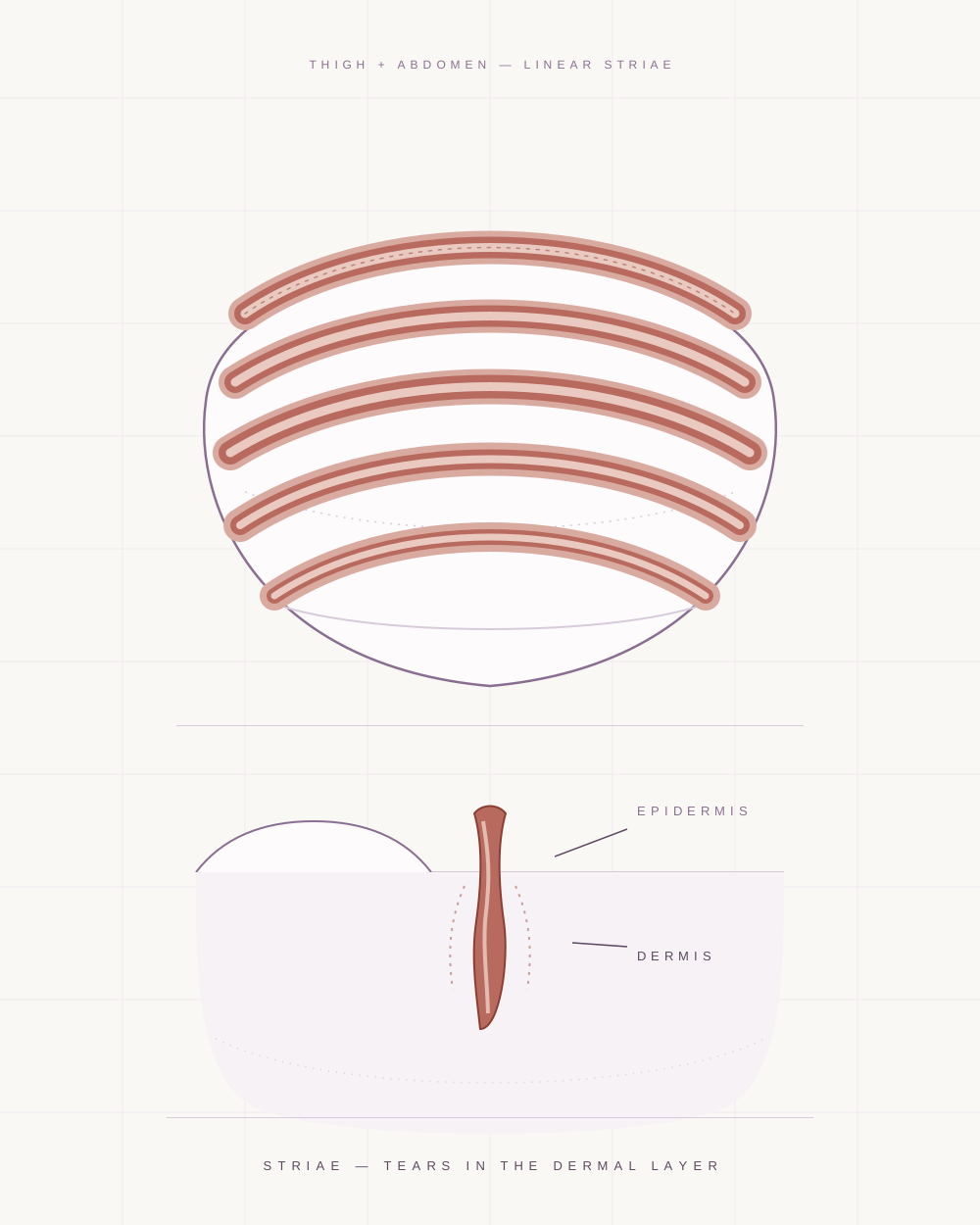
Stretch marks — striae developing in the dermis (clinical diagram)
What are stretch marks and how are they treated?

Stretch marks are common, treatable changes in the skin's deeper layer.

They form when skin is stretched faster than it can remodel, leaving linear marks in the dermis. Fresh marks appear red or pink (striae rubra) and mature over time into pale, atrophic white lines (striae alba). Stretch marks are not a disease and do not need to be treated — but where they matter to a patient, dermatologist-led treatment begins with staging the marks, then builds a realistic, measured plan around that stage.

The Basics

What are stretch marks?

Stretch marks — striae — are linear bands that form when the skin is stretched faster than it can remodel itself.

The stretch can outpace the skin's production of collagen and elastin, and the dermal layer tears. The body repairs the area with scar-like tissue, which shows as a line through the skin. Fresh marks carry active blood flow and look red or pink; as that settles, the marks fade to pale, atrophic white lines with a slightly wrinkled surface.

Stretch marks are a change, not a disease. They are common, they do not harm health, and they affect people of both sexes across many ages. Where they cause concern, treatment is directed by one question first — what stage are the marks in?

Classification

Forms of Stretch Marks

Stretch marks are described by their stage and by their setting. Colour divides them into fresh red-pink marks (striae rubra) and mature white marks (striae alba); their setting ties them to pregnancy, growth or weight change. The two axes together — colour and cause — shape how and when they are treated.

A person can carry red and white marks at the same time — an old mark beside a new one. Each is staged on its own merits rather than treated as a single fixed problem.

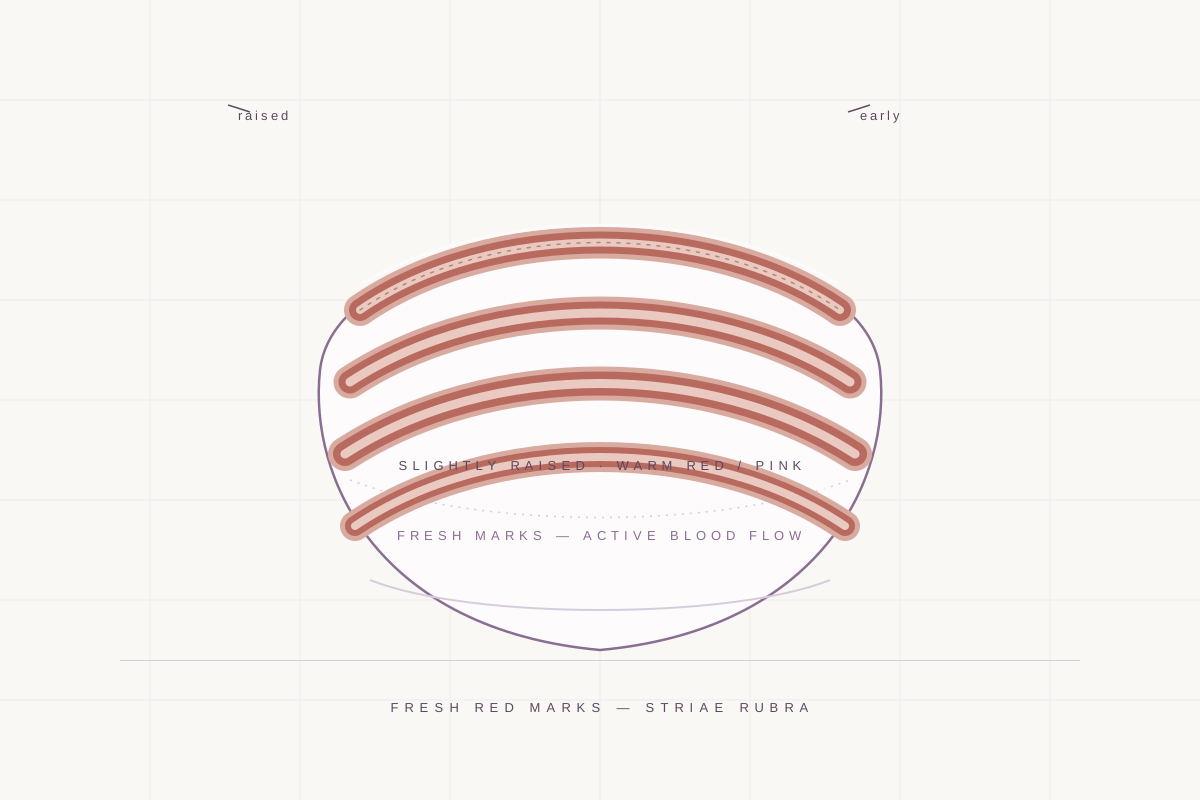
Stretch marks — fresh red striae rubra as slightly raised pink-red linear bands on skin (clinical diagram)
I

Striae Rubra

Fresh red marks

Fresh stretch marks are pink-red or reddish-purple, often slightly raised, with a silky surface. The colour reflects active blood vessels — the sign of recent dermal tearing. Early marks are the most responsive stage, which is why staging matters: treatment while a mark is still red generally has a better chance than waiting until it has fully matured.

  • Pink or red lines
  • Slightly raised, silky feel
  • Can itch or feel tender early
Common sites
Abdomen, thighs, hips, breasts
Colour
Pink, red or reddish-purple
Age
Fresh — weeks to a year or so
Key feature
Active blood vessels
Response to treatment
Best — the most responsive stage
Understand red mark treatment
Stretch marks — mature white striae alba as pale, atrophic linear troughs on skin (clinical diagram)
II

Striae Alba

Mature white marks

As fresh marks settle, blood flow reduces and they become paler — white or ivory, flat or slightly depressed, with a thin, wrinkled surface. Striae alba is the mature stage of the same process, not a different condition. These marks are more established, so treatment focuses on texture, usually needs more sessions, and the results are framed honestly.

  • White or ivory lines
  • Flat or depressed, atrophic
  • Thin wrinkled surface
Common sites
Same areas — abdomen, thighs, hips
Colour
White or ivory, pale
Age
Mature — months to years
Key feature
Atrophic, settled tissue
Response to treatment
Good — more sessions for texture
Explore mature mark treatment
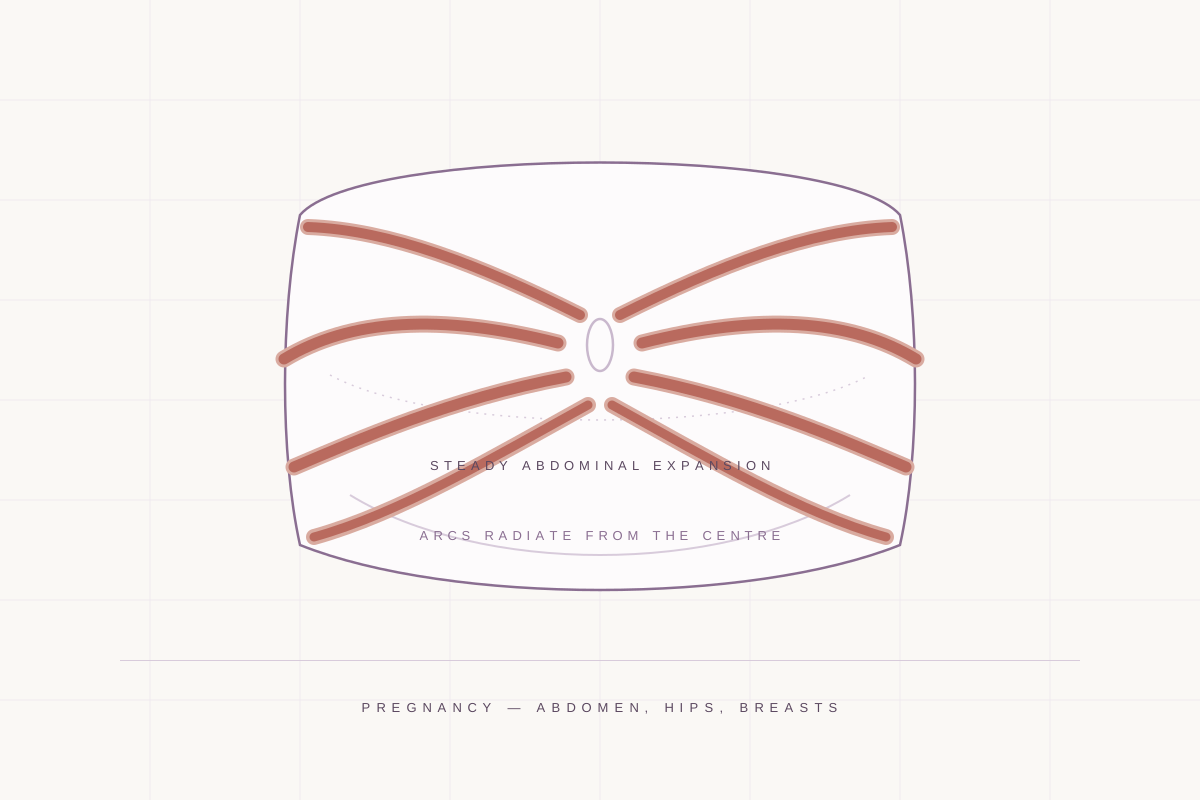
Stretch marks during pregnancy — arcing striae radiating across the abdomen and hips (clinical diagram)
III

Pregnancy Marks

Abdomen, hips & breasts

During pregnancy the abdomen, hips and breasts expand quickly, and the skin can outpace its own remodelling. Marks typically arc outward from the centre of the abdomen and appear on the hips and breasts, most often in the later months. Treatment is planned for after pregnancy and, where relevant, after breastfeeding — not during it.

  • Abdomen, hips and breasts
  • Arcing bands from the centre
  • Appear in later months
Common sites
Abdomen, hips, breasts
Colour
Red early, white later
Age
Later pregnancy, post-partum
Key feature
Arcs out from the centre
Response to treatment
Good — planned post-lactation
Pregnancy stretch mark treatment
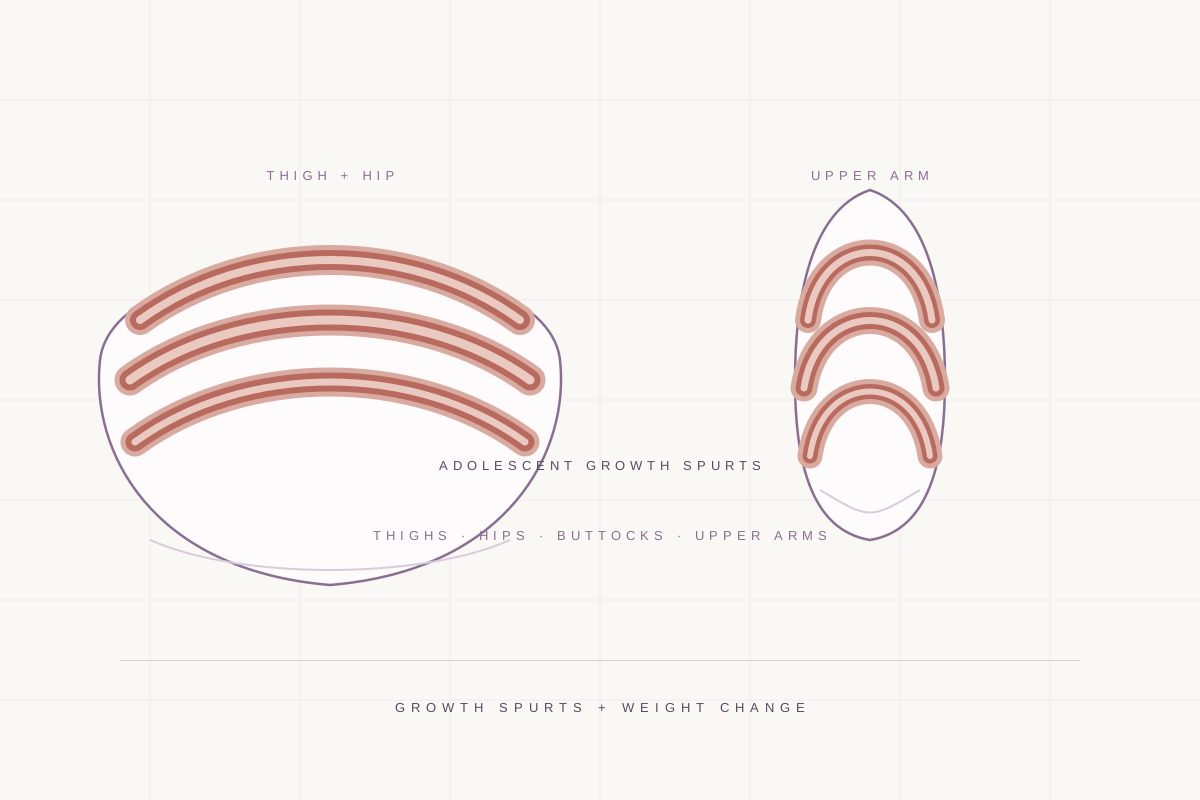
Stretch marks from a growth spurt or weight change — striae on the thigh, hip and upper arm (clinical diagram)
IV

Growth & Weight-Change Marks

Thighs, hips, buttocks, arms

Growth spurts in adolescence and changes in weight in either direction can stretch the skin of the thighs, hips, buttocks, flanks and upper arms. Muscle gained quickly — for example in bodybuilding — can do the same. The marks behave like any other striae: red while fresh, white when mature, and treated by stage rather than by size.

  • Thighs, hips, buttocks
  • Upper arms and flanks
  • Tied to growth or weight spurts
Common sites
Thighs, hips, buttocks, arms
Colour
Red then white
Age
Adolescence or weight change
Key feature
Follows the direction of stretch
Response to treatment
Good — by stage, as other marks
Growth-related mark treatment
The Window

When Marks Respond

Response is strongly tied to stage. The fresher the mark, the more responsive it tends to be — not because older marks are untreatable, but because established tissue simply needs more work and more time. This is precisely why a stage-first approach matters.

I

Early — red marks

Red or pink marks, usually under a year old. This is the most responsive stage — the dermis is still actively repairing, and session-based care generally shows the clearest, most consistent improvement.

II

Established — the pink-white transition

Marks are losing colour but are not yet fully atrophic. This transitional stage responds well too, though it typically needs more sessions than a fresh mark and results come a little more slowly.

III

Mature — white, atrophic marks

White, flat or depressed marks are the most established. Improvement is still possible — texture softens and marks become less visible — but expectations must be honest: erasure is not a realistic promise at any stage.

Where they appear

Where Stretch Marks Appear

Stretch marks follow the direction of the stretch, so their sites are predictable — the places where skin expands fastest. Distribution is a clue to cause, and it matters in planning: a single mapped set of areas is treated differently from marks scattered widely.

The same body can show fresh and mature marks together, and some areas respond faster than others. Distribution is assessed alongside colour and history before any plan is set.

Stretch marks on the abdomen and hips — arcing bands radiating from the centre (clinical diagram)Trunk & hips
A

Abdomen & Hips

The abdomen and hips carry the classic distribution of stretch marks — including the arcing bands seen during pregnancy and with weight change. The skin here expands quickly, and the marks follow the direction of the stretch, curving outward from the centre.

How abdomen marks are treated
Stretch marks on the thigh, hip and buttock — bands running across the direction of growth (clinical diagram)Growth & weight spurs
B

Thighs & Buttocks

The thighs and buttocks are common sites during adolescent growth spurts and with weight change in either direction. Bands here run roughly across the direction of growth, most often on the outer thighs and the buttocks, and are typically a mix of red and white marks of different ages.

Thigh & hip mark treatment
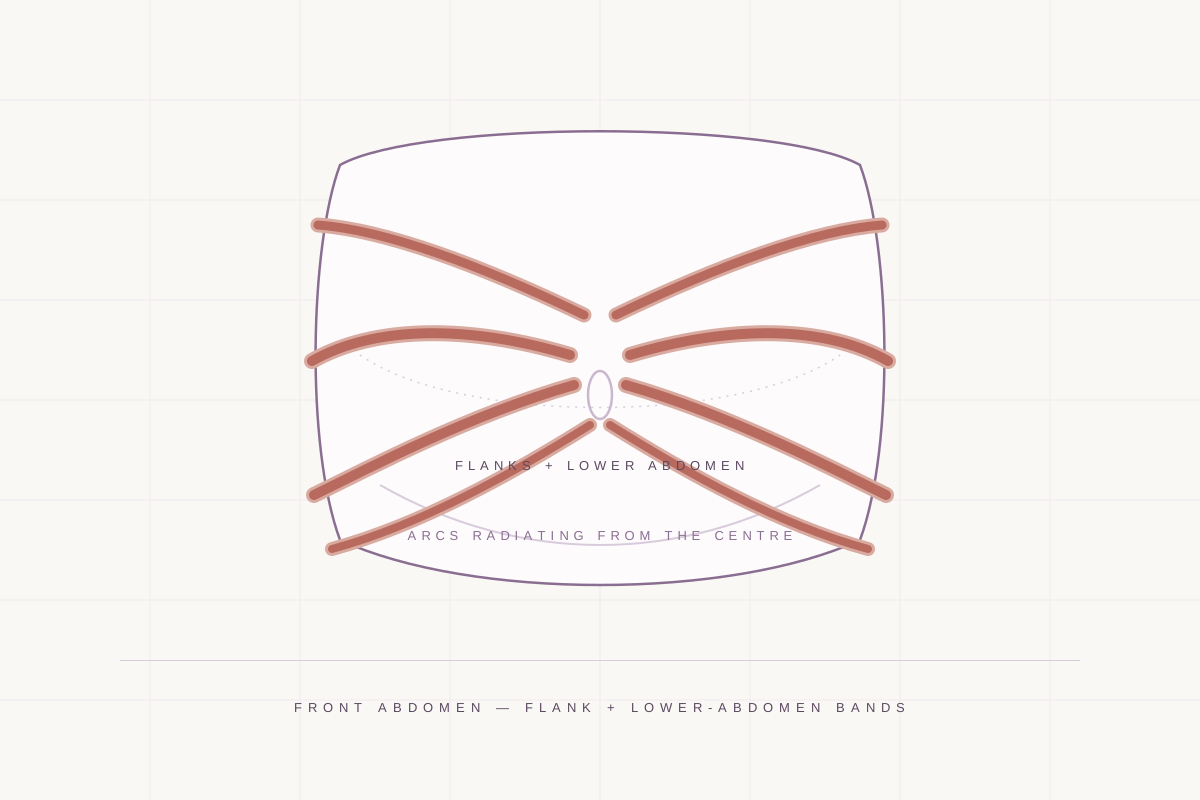
Stretch marks on the flanks and lower abdomen — side of the trunk diagram with arcing bands (clinical diagram)Flanks & upper arms
C

Arms & Flanks

Rapid muscle gain, growth spurts and weight change can also leave marks on the upper arms and the sides of the trunk — the flanks. They sit where skin is stretched suddenly, and they are treated by the same stage-first logic as marks anywhere else on the body.

MNRF for textural marks
The Mechanisms

What causes stretch marks?

Stretch marks are the result of skin being stretched faster than it can remodel — but stretching alone is not the whole story.

Three factors usually combine. First, mechanical stretch — rapid growth, weight gain, muscle gain or pregnancy — pulls at the skin. Second, genetic tendency: some people's skin is more prone to striae than others'. Third, hormonal influence: puberty, pregnancy, and conditions that raise cortisol levels can change how well collagen holds the skin, so a prone person may develop marks from a fairly modest stretch.

Two cautions are worth stating plainly. Prolonged, unsupervised use of topical steroid creams can thin the skin and make striae more likely in susceptible people. And no cream 'erases' an established mark — topical products moisturise the surface; they cannot undo the change in the dermal layer.

What to look for

Stretch Mark Symptoms & Signs

Stretch marks are usually painless, and many people notice them only as lines forming on the skin. When there are signs, they change with the age of the mark:

Red or pink lines

Linear bands, often on the abdomen, thighs, hips or breasts

Slightly raised, silky feel

Fresh marks can sit just above the surrounding skin

White, atrophic surface

Mature marks are flat or depressed with a wrinkled surface

Itching or mild discomfort

Early marks can itch or feel slightly tender as the dermis repairs

Marks at different ages

A mixture of red and white marks often coexists on one person

Across Life Stages

Who gets stretch marks?

Stretch marks are common — they are not limited to any sex, age or body type.

They are most familiar in pregnancy, and common in adolescents during growth spurts, in people losing or gaining weight, and in those building muscle quickly. Both women and men get them, and family tendency plays a role — if your parents had stretch marks, you are more likely to, because skin qualities such as elastin behaviour are partly inherited.

Whether marks appear, and how easily, varies from person to person. There is no single 'stretch mark profile' — assessment looks at the person, the marks and their stage.

Assessment

How are stretch marks diagnosed?

Stretch marks are diagnosed on examination alone.

A dermatologist looks at the colour, width, site and age of the marks to stage them — red (striae rubra) or white (striae alba) — and checks for anything that might look similar, such as certain skin changes that accompany hormonal conditions.

In Indian skin, dermoscopy — a magnified look at the skin surface — helps distinguish stretch marks from pigment alternations and other linear marks, and confirms the stage before treatment is planned. Photographs are usually taken at the first visit so progress can be compared fairly.

The Plan

Stretch Mark Treatment

There is no single 'best' stretch mark treatment. The right plan depends on the stage of the marks — red or white — their cause, their extent and your skin. Care is staged: supportive home care, selected in-clinic procedures, and a sequenced course with honest, measured expectations throughout.

01

Topical & Supportive Care

Daily home care supports whatever is done in clinic. Gentle moisturising — twice a day, especially after bathing — keeps the skin comfortable, silicone-based products and suitable emollients can help early marks feel smoother, and sun protection matters throughout. Topical retinoids are only used under dermatologist supervision and are never appropriate during pregnancy.

02

In-Clinic Procedures

In-clinic options target the dermal layer where the tear has occurred. Microneedling with radiofrequency (MNRF) delivers controlled heating into the dermis to encourage collagen remodelling; microneedling with PRP adds your own platelet-derived growth factors to the same remodelling process; and PRX+ is a no-needle resurfacing approach for texture. Each is chosen by mark stage and skin type — red marks and white marks behave differently.

03

Course & Expectations

Stretch mark work is a course, not a single sitting. Sessions are sequenced several weeks apart so the skin can remodel between visits, with a written review around the halfway point and photographs compared against the first visit. Mature marks need more time than fresh ones — the goal is measurable improvement, honestly explained, with maintenance to protect it.

The clinic's dedicated medical protocolStretch Mark Reduction →
Treatment

Treatment Staged by Mark Type

Stage
Typical Focus
Detail
Striae rubra
Treat while still red where possibleGentle active-phase home careMicroneedling / MNRF to encourage remodelling
Striae alba
Texture work — MNRF, microneedling + PRPMore sessions to refine textureExpect improvement, not erasure
Pregnancy marks (post-lactation)
Timed after pregnancy + breastfeedingSteady, unhurried courseOften combined with body-tightening care
Established multi-site marks
Mapped and measured upfrontStaged course by areaMaintenance to protect the result
In Delhi

Stretch Mark Treatment in Delhi at Laser Skin Hair Nail Clinic

At Laser Skin Hair Nail Clinic, Gujranwala Town, Delhi, stretch mark care begins with staging — examined first, treated second. Dr. Shivali Sethi brings 22 years of clinical experience to that assessment: marks are mapped and measured, a realistic plan is agreed in writing, and expectations are set honestly at the first consultation.

  • In-clinic MNRF and microneedling options for red and white marks
  • A staged course with a written halfway review
  • Honest expectations — improvement measured, not erased
  • A printed aftercare card for home care between sessions
Clinical perspective
Dr. Shivali SethiDermatologist · Cosmetologist · DermatosurgeonMBBS · DDVL · FACSI
Book a Stretch Mark Consultation in Delhi +91 99101 95838
Our Approach

How We Assess & Treat Stretch Marks

I
Assess
Examination, photographs, and a review of history, activity and previous treatments.
II
Stage
Marks are staged — red (rubra) or white (alba) — and mapped by site and extent.
III
Plan
A personalised written plan and a realistic timeline for improvement.
IV
Treat
Sessions are delivered in sequence — microneedling, MNRF, PRP or PRX+ as advised.
V
Review
Photographic review at the halfway point, refinement, and a maintenance plan.
Dr. Shivali Sethi

Dr. Shivali Sethi

Dermatologist-led stretch mark assessment in Delhi — stage first, a realistic plan second, honest expectations throughout.

MBBSDDVLFACSIDermatosurgeon
Three different things

Stretch Marks vs Acne Scars vs Surgical Scars

Not every line on the skin is the same change. Stretch marks, acne scars and surgical scars have different causes, different textures and different treatments — knowing which one you have decides the plan.

1Linear, dermal Stretch

Stretch marks (striae)

Linear bands caused by the dermis tearing under stretch — red while fresh, white and atrophic when mature. They follow the direction of the stretch and sit in areas like the abdomen, thighs and hips.

Stretch mark care →
2From acne, different texture

Atrophic acne scars

Depressions left behind by deep or prolonged acne inflammation — ice-pick, boxcar and rolling patterns. They are a structural change from acne, not from stretching, and they respond to different, mostly textural, treatment.

Acne scar treatment →
3Linear, from wounds

Surgical scars

Straight or curved lines left after cuts, operations or injuries heal. They are a different repair process — recent ones are managed with scar care, and established ones may be softened with dermatosurgical or procedural work.

Surgical scar treatment →
Avoidables

What Can Make Stretch Marks Worse?

Some habits do not just fail to help — they can irritate fragile skin or delay the remodelling that improvement depends on.

  • Creams that claim to erase stretch marks — no cream removes an established dermal change
  • Aggressively massaging or scrubbing fragile marks — friction on early striae can irritate the skin
  • Sun exposure without protection — fresh red marks pigment more easily in Indian skin
  • Weight cycling — repeated large changes in weight can add new marks to existing ones
  • Judging a course before it finishes — realistic results need the full sequence of sessions
The Everyday

Everyday Care for Stretch Marks

Home care does not erase stretch marks, but it keeps the skin comfortable, protects fresh marks, and supports in-clinic work between sessions. This is a shape, not a prescription — and in childhood, marks appearing without an obvious growth or weight change deserve a dermatologist's review.

Morning

Gentle cleanse or rinse → moisturiser or suitable emollient → silicone product if advised → sunscreen on exposed skin

Sun protection matters more than it sounds: fresh red marks pigment quickly in Indian skin when left unprotected.

Night

Moisturise while skin is damp after a bath → advised product → hydration and consistent routine

Consistency beats intensity. Marks respond over weeks and months — not days — and the course only works if it is completed.

The Right Time

When Should You See a Dermatologist for Stretch Marks?

See a dermatologist if marks are appearing quickly and in large numbers, turning white and atrophic, itching or feeling tender, changing colour in an unusual way, or affecting how you feel about your skin. The earlier the stage, the more treatment has to work with.

Book a Consultation
  • 01Red or pink marks appearing during pregnancy, growth or weight change
  • 02Marks turning white, flat and atrophic
  • 03Widespread or many marks across several areas
  • 04Marks that itch, feel tender, or continue to spread
  • 05Marks appearing suddenly without an obvious cause
  • 06A colour change beyond the usual red-to-white pattern
  • 07Home care not doing what you hoped after several months
  • 08Marks affecting how you feel about your skin
False Friends

Stretch Mark Myths: What Is Actually True?

Do creams erase stretch marks?

No. A cream cannot remove a change that sits in the dermis. Moisturisers and silicone-based products improve surface feel and help early marks look better, but no topical erases an established mark.

Are stretch marks permanent?

They are lasting — a form of scarring — but they are not static. Fresh red marks mature to pale white ones, and with staged treatment texture and appearance can improve noticeably, even if the mark never fully disappears.

Can creams prevent stretch marks during pregnancy?

Creams cannot guarantee prevention. Keeping the skin well-moisturised and gaining weight steadily may help comfort and, for some, makes early marks less obvious — but stretch marks in pregnancy are influenced strongly by skin type and genetics.

Do red marks always mean the mark is new?

Generally, yes — red or pink marks are the fresh, active stage and often respond best. A mark that stays intensely red or grows unusually may deserve a check, as a few other skin conditions can look similar.

Only women get stretch marks?

No. Men get them too — from growth spurts, rapid weight or muscle gain, and the same stretching forces. Stretch marks are common across sexes.

Do natural remedies cure stretch marks?

No remedy erases the dermal change. Oils and creams can moisturise and improve surface feel, but claims of removal should be read with scepticism.

Can weight loss make stretch marks disappear?

Weight loss can reduce stretching forces and help prevent new marks, but established marks do not disappear — and they can become more obvious as surrounding skin changes. Treatment is by stage, not by weight.

Questions & Answers

Frequently Asked Questions About Stretch Marks

The questions patients ask most often — answered directly, without the jargon.

01

What are stretch marks?

Stretch marks — striae — are linear bands that form when the skin is stretched faster than it can remodel, causing a tear in the dermal layer. They appear red or pink while fresh (striae rubra) and mature to pale, atrophic white lines (striae alba). They are a common change, not a disease.

02

What is the difference between red and white stretch marks?

Red or pink marks (striae rubra) are the fresh, active stage — blood vessels are still present, and they tend to respond best to treatment. White or ivory marks (striae alba) are the mature stage: blood flow has settled and the marks are flat or atrophic. The two stages are treated differently, which is why staging comes first.

03

Can stretch marks be removed completely?

Completely removing a mark is rarely a realistic promise. What staged treatment can do is meaningfully improve the appearance — softening texture, fading fresh colour and making mature marks less visible. The goal is measured improvement, honestly explained, not erasure.

04

When is the best time to treat stretch marks?

Early — while a mark is still red or pink — is generally the most responsive stage. Mature white marks can still improve, but they need more sessions and longer timelines. Treatment after pregnancy is timed for after birth and, where relevant, after breastfeeding.

05

Which treatment works best for stretch marks?

There is no single best option for everyone. In-clinic care commonly combines microneedling with radiofrequency (MNRF), microneedling with PRP, or PRX+ resurfacing, chosen by mark stage, site and skin type. The plan is individual — red marks and white marks behave differently.

06

Are stretch marks during pregnancy treatable?

Yes, but treatment is planned for after pregnancy and, where relevant, after breastfeeding — not during it. During pregnancy, gentle moisturising and sun protection keep the skin comfortable; the staged plan begins once the body has settled.

07

How many sessions are needed?

That depends on the stage and extent of the marks. Fresh marks typically need fewer sessions than mature ones. Care is delivered as a course with a written review roughly halfway, and the count is set for your specific presentation at the first consultation.

08

Are stretch mark treatments painful?

Most procedures are well-tolerated. Discomfort is generally mild and momentary — numbing is used where appropriate, and recovery is simple, with redness that settles quickly. Any real discomfort is discussed openly before any session begins.

09

Can stretch marks be prevented?

No method guarantees prevention. Steady weight changes, well-moisturised skin and avoiding prolonged unsupervised steroid creams may help, but genetics and skin type play a large role. Early care when marks first appear gives treatment the most to work with.

10

Where can I get stretch mark treatment in Delhi?

At Laser Skin Hair Nail Clinic, Gujranwala Town, Delhi. Stretch mark care is led by Dr. Shivali Sethi (MBBS · DDVL · FACSI), beginning with a stage-first assessment, a realistic written plan, and honest expectations throughout. Book a consultation to get started.

Begin

Forty-five minutes,
unhurried.

The first consultation is examination first. We tell you plainly what is treatable, what is not, and what a realistic, staged plan looks like for your stretch marks.