Black and Blue Tattoo Removal in New Delhi
Black and blue ink, which absorbs the full treatment wavelength well and is the most straightforward to treat.
- Black and blue ink
- Absorbs wavelength well
- Most straightforward

Q-switched laser for safe, progressive tattoo clearance.
Multi-wavelength Q-switched Nd:YAG for black, blue, red and green pigment removal.
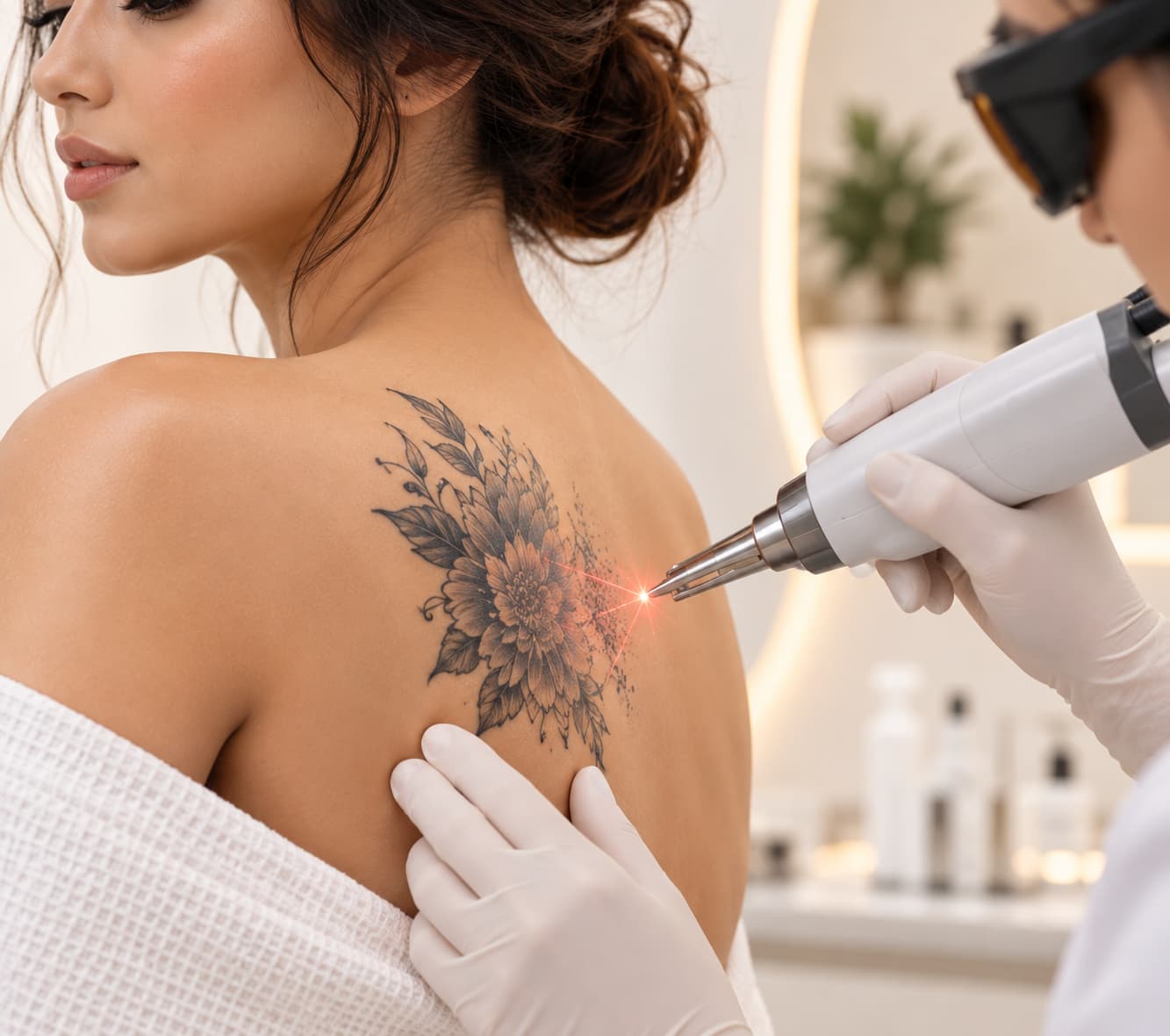
Tattoo removal uses Q-switched Nd:YAG laser at multiple wavelengths to target different ink colours — 1064 nm for black/blue, 532 nm for red/orange. Progressive clearance over multiple sessions. Honest counselling: full removal can take 8–15 sessions depending on ink density, depth and colour.
We sequence tattoo removal into a course that respects how skin actually changes — visible result by the end of the schedule, with a written review at the halfway mark. Strength is stepped up only when the previous session has settled completely.
A consultation precedes the first session: examination, history, and a written plan delivered the next morning. We do not double-book.
Hover or tap any indication for context. The decision to treat depends on the examination — we explain plainly when it is the right answer and when it is not.
Cooling pre-treatment, the laser pass, post-treatment care.
Monthly for facial work, every six weeks for body laser hair reduction.
Quoted in person after a full assessment. The practice does not publish prices online.
Tattoo removal uses Q-switched Nd:YAG laser at multiple wavelengths to target different ink colours — 1064 nm for black/blue, 532 nm for red/orange. Every session opens with assessment and a test spot before the laser pass.
If your question isn't here, write to us. We answer every enquiry — usually the same day.
Ask the practice →Multi-wavelength Q-switched Nd:YAG, matched to the ink. The wavelength is chosen by colour, because inks absorb light differently.
Black and blue ink, which absorbs the full treatment wavelength well and is the most straightforward to treat.
Red and orange ink, which needs a different wavelength to black — a common reason for variable results.
Older tattoos that have faded unevenly, where residual pigment sits at differing depths.
Cosmetic tattoo — lip and brow pigment placed by a practitioner, removed with the same wavelengths.
Treatments we may plan alongside tattoo removal, depending on what the examination actually shows.

Twenty-two years of considered dermatology — examined first, prescribed second. The practice has only refined the standard.
Tailored to you.
Every skin is unique. That's why we begin with a detailed assessment to understand your concerns and recommend what truly suits your skin.